Does white rice raise blood sugar? What happens when you eat it
On this page
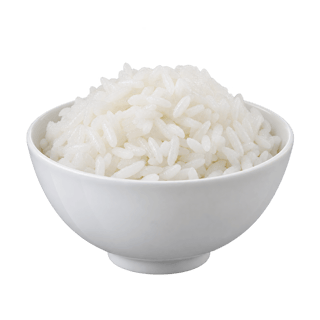
A cup of cooked white rice has about 44 grams of carbs you digest, more than the 38 grams of sugar in a can of cola. Rice also scores higher on the GI scale, 73 against 59. Put those together and a single cup makes a bigger hill than the can, and a takeout portion of one and a half to two cups makes a much bigger one. That doesn’t make rice bad food, but a cup of it is a lot of glucose, already lined up in chains.
What we’d do
Keep the rice to about a cup and fill the rest of the plate with protein and vegetables, eaten first. Pick basmati when you can. Leftover rice from the fridge is a small win, since chilled and reheated rice tested lower in one study. Then walk for 10 minutes after the meal.
Why rice surprises people
White rice doesn’t taste sweet, so it doesn’t feel like sugar. But starch is glucose linked into long chains, and cooked white rice is mostly starch with very little fiber (0.6 g in a cup). Once your gut cuts the chains, it’s glucose in your blood like any other.
That’s why the old Gyroscope glucose guide put a bowl of white rice next to a can of cola, and why people with a sensor are often shocked by their sushi or their burrito bowl more than their dessert.
The trip, stop by stop
-
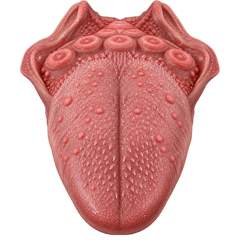 Mouth Soft grains, little chewing, and saliva starts on the starch.
-
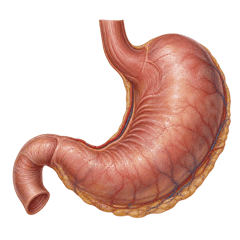 Stomach Plain rice moves on faster than rice with meat, fat or vegetables.
-
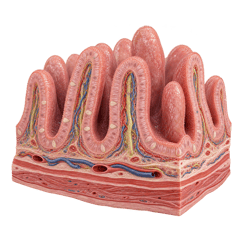 Small intestine Enzymes cut the starch into glucose, and it passes into the blood.
-
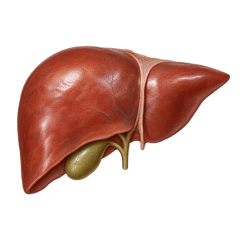 Blood and liver The liver takes its share first. The rest raises blood sugar.
-
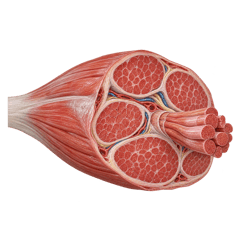 Muscle Insulin opens muscle to the glucose. A walk opens it more.
Rice gets the same treatment as any starch. Saliva starts on it, the stomach mixes it and lets it out, and in the small intestine the pancreas’s enzymes break the starch into simple sugars that pass through the wall into your blood. The blood goes to the liver first, which keeps 30 to 40% of an oral glucose load, and the rest spreads through your body until insulin moves it into muscle.
The type of rice and how it’s cooked move the number. Boiled white rice scores 73, brown rice 68 and rice porridge, cooked until the grains fall apart, 78. Sticky rice goes higher still, 87 in a Chinese test.
What the hill looks like
- White rice, fresh peaks near 130 mg/dL (7.2 mmol/L) at 40 minutes and is 99 at two hours.
- Basmati peaks near 122 mg/dL (6.8 mmol/L) at 40 minutes and is 97 at two hours.
- Chilled, reheated peaks near 120 mg/dL (6.7 mmol/L) at 40 minutes and is 96 at two hours.
- Can of cola peaks near 116 mg/dL (6.4 mmol/L) at 29 minutes and is 91 at two hours.
A teaching model built from published averages for a healthy adult, not a prediction for you. People eating the same meal can differ a lot. How the model works
A cup and a half of white rice carries about 67 g of digestible carbs and a glycemic load of about 49, more than two cans of cola. Basmati (57 in an Australian test) brings it to about 38. Rice cooked, refrigerated for 16 to 20 hours and reheated scored 54 in a test in India, which brings the same portion to about 36.
The rice type moves the hill by about a quarter. The portion moves it by as much as you like: one cup of white rice is about 32, two cups about 65.
What makes it smaller
- Less rice, more of everything else. It’s the biggest change you can make. A cup next to protein and vegetables is a medium hill.
- Eat it last. In 15 adults with prediabetes, eating the protein and vegetables first and the carbs 10 minutes later lowered the peak by more than 40%. See rice first or protein first?
- Pick slower rice. Basmati tested between 50 and 66 in different studies. Jasmine tested between 68 and 88, so it’s no help.
- Use the leftovers. Chilled and reheated rice tested lower in one study. It’s a small effect next to the portion.
- Walk after. Ten-minute walks after meals made the rise 12% smaller than one daily walk, and 22% smaller after dinner.
The surprising part
Some of the biggest hills in the 100 meals that raise blood sugar most come from rice dishes that don’t taste sweet at all: fried rice (an instant version tested at 80 in China), bibimbap, curry over jasmine rice. General Tso’s chicken with fried rice is third of 248 meals, ahead of almost every dessert.
8 sources
- US Department of Agriculture, Agricultural Research Service, Nutritive Value of Foods, Home and Garden Bulletin 72, 2002, items 14 and 636ars.usda.gov
- Atkinson FS, Foster-Powell K and Brand-Miller JC, International tables of glycemic index and glycemic load values, Diabetes Care, 2008pmc.ncbi.nlm.nih.gov
- University of Sydney, GI Database: white rice boiled, refrigerated 16 to 20 h and reheated (India, 1998), jasmine and basmati rices, accessed November 15, 2026glycemicindex.com
- Shukla AP and others, The impact of food order on postprandial glycaemic excursions in prediabetes, Diabetes, Obesity and Metabolism, 2019pubmed.ncbi.nlm.nih.gov
- Gentinetta S and others, Dietary recommendations for the management of gastrointestinal symptoms in patients treated with GLP-1 receptor agonist, Diabetes, Metabolic Syndrome and Obesity, 2024pmc.ncbi.nlm.nih.gov
- National Institute of Diabetes and Digestive and Kidney Diseases, Your digestive system and how it worksniddk.nih.gov
- DeFronzo RA and Tripathy D, Skeletal muscle insulin resistance is the primary defect in type 2 diabetes, Diabetes Care, 2009pmc.ncbi.nlm.nih.gov
- Reynolds AN and others, Advice to walk after meals is more effective for lowering postprandial glycaemia in type 2 diabetes than advice that does not specify timing, Diabetologia, 2016pubmed.ncbi.nlm.nih.gov