Does pasta raise blood sugar? What happens when you eat it
On this page
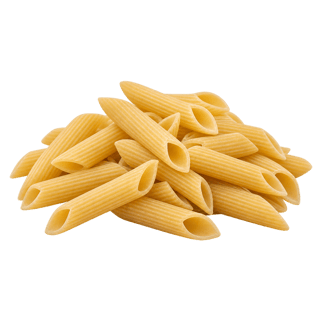
Pasta is white flour, and it still scores only 49 on the GI scale, against 75 for white bread. So a cup of spaghetti reaches your blood slower than the same carbs in bread. What makes pasta a big hill is the plate: a restaurant serving is often two and a half cups, about 94 grams of digestible carbs, and slow times big is still big.
What we’d do
Keep pasta, and shrink the pile. A cup to a cup and a half next to protein and vegetables is a medium hill, and a walk after dinner trims it more. Cook it a little firm, since longer cooking raised the GI of the same spaghetti in one test.
Why pasta gets a bad name
Low-carb diets put pasta next to sugar, and it’s easy to see why. It’s refined wheat, it’s mostly starch, and a bowl of it can leave you sleepy. But the international GI tables tell a more interesting story. White spaghetti scores 49 and whole wheat spaghetti 48, both in the low range (55 or less). White bread made from much the same flour scores 75.
The flour isn’t the whole story. How the food is built changes it too, and pasta comes apart slowly.
The trip, stop by stop
-
 Mouth Chewing breaks the strands up, and saliva starts on the starch.
-
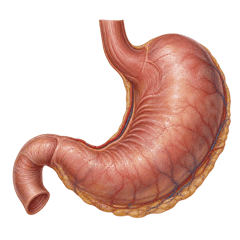 Stomach With sauce and meat, it leaves slowly.
-
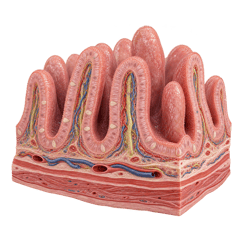 Small intestine Enzymes work in from the outside of each strand, so glucose trickles out.
-
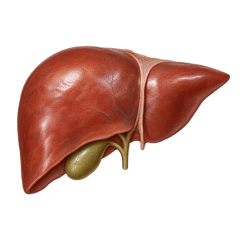 Blood and liver In the model the hill peaks around 40 to 50 minutes and stays up a while.
-
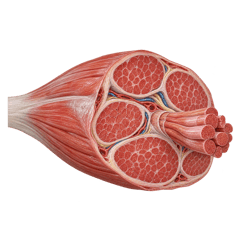 Muscle Most of the sugar insulin moves ends up here, more if you walk.
When you eat pasta, chewing breaks the strands into pieces, and saliva’s enzyme starts on the starch. Your stomach mixes it with digestive juices and lets it out a little at a time. In the small intestine, enzymes from the pancreas finish cutting the starch into glucose, and the wall passes it into your blood.
The difference from bread shows up in that last step. Bread is a light, airy sponge with lots of surface for enzymes to reach. A strand of pasta is dense. The tables don’t say why for each food, but the numbers line up with how open the food is: the same wheat scores 75 as bread and 49 as spaghetti.
Cooking time moves it too. In a French test, the same brand of spaghetti scored 59 after 11 minutes of boiling and 65 after 16 and a half. Softer pasta came apart faster.
What the hill looks like
- White bread, same carbs peaks near 149 mg/dL (8.3 mmol/L) at 40 minutes and is 103 at two hours, with 34 minutes over 140.
- 2.5 cups spaghetti peaks near 128 mg/dL (7.1 mmol/L) at 40 minutes and is 98 at two hours.
- 1 cup spaghetti peaks near 105 mg/dL (5.8 mmol/L) at 40 minutes and is 93 at two hours.
A teaching model built from published averages for a healthy adult, not a prediction for you. People eating the same meal can differ a lot. How the model works
A cup of cooked spaghetti has about 37.6 g of digestible carbs (40 g of carbohydrate minus 2.4 g of fiber, from the USDA). At a GI of 49, that’s a glycemic load of about 18. Two and a half cups is about 46, more than two cans of cola. The same 94 g of carbs as white bread would be about 70.
The model draws plain pasta. Add meat sauce and cheese and the real hill gets smaller again. When researchers tested a spaghetti meal with chicken, vegetables and sauce in 30 people, it came out 19 points lower on the GI scale than the parts predicted.
What makes it smaller
- The portion. Half the pasta is about half the load. A cup next to a big serving of vegetables and some protein is a steady plate.
- What’s on it. Fat, protein and fiber slow the stomach. That’s the idea behind pasta with olive oil and vegetables.
- Firm, not soft. In that French test, an extra five and a half minutes of boiling raised the GI by 6 points.
- A walk after. Ten minutes of walking after each meal made the rise 12% smaller than one daily walk in 41 adults with type 2 diabetes, and 22% smaller after dinner, which is when most pasta gets eaten.
The surprising part
Pasta is one of the few refined foods in the low GI range, lower than brown rice (68) and boiled potato (78). It sits near the middle of the meal index as a moderate plate, and moves into the top 50 as a restaurant pile. Spaghetti and meatballs with garlic bread is fourth. Our restaurant spaghetti bolognese page has the numbers.
8 sources
- Atkinson FS, Foster-Powell K and Brand-Miller JC, International tables of glycemic index and glycemic load values, Diabetes Care, 2008pmc.ncbi.nlm.nih.gov
- University of Sydney, GI Database, Spaghetti, white, durum wheat semolina (Panzani), boiled for 11 min and for 16.5 min, France 1988, accessed November 15, 2026glycemicindex.com
- US Department of Agriculture, Agricultural Research Service, Nutritive Value of Foods, Home and Garden Bulletin 72, 2002, item 646ars.usda.gov
- Dodd H and others, Calculating meal glycemic index by using measured and published food values compared with directly measured meal glycemic index, American Journal of Clinical Nutrition, 2011ourarchive.otago.ac.nz
- University of Sydney, About glycemic indexglycemicindex.com
- National Institute of Diabetes and Digestive and Kidney Diseases, Your digestive system and how it worksniddk.nih.gov
- DeFronzo RA and Tripathy D, Skeletal muscle insulin resistance is the primary defect in type 2 diabetes, Diabetes Care, 2009pmc.ncbi.nlm.nih.gov
- Reynolds AN and others, Advice to walk after meals is more effective for lowering postprandial glycaemia in type 2 diabetes than advice that does not specify timing, Diabetologia, 2016pubmed.ncbi.nlm.nih.gov