How does food turn into blood sugar? What happens when you eat
On this page
Every meal takes the same route. You chew it, your stomach churns it, your small intestine cuts the starch and sugar into glucose and pushes it into your blood, and your liver and muscles pull it back out. The hill a sensor draws after lunch is that trip. How tall and how long it gets comes down mostly to how much starch and sugar went in, and then to how fast it could get through.
What we’d take from it
Watch the amount first. A plate with half the starch makes roughly half the hill, whatever the food. Then slow it down: eat the protein and vegetables first, keep some fat on the plate, pick foods with their structure intact, and walk for 10 minutes afterward so your muscles pull the sugar in while it’s arriving.
Why it feels mysterious
A sensor makes blood sugar look random. The same oatmeal makes a big hill on Monday and a small one on Thursday, and a slice of pizza does better than a banana. Feeds are full of rules about which food “spikes” you, and they don’t agree.
Most of it stops being mysterious once you follow the food. Starch is just glucose molecules linked in long chains, and sugar is glucose (and fructose) already loose. Your gut’s job is to break the chains apart and pass the glucose through. Anything that changes how much glucose gets through, or how fast, changes the hill.
The trip, stop by stop
-
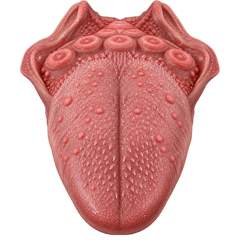 While you eat Mouth Chewing breaks food up, and an enzyme in saliva starts cutting starch apart.
-
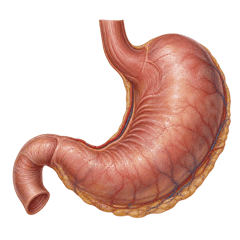 First hour or more Stomach Muscles mix it with digestive juices and let it out slowly. Drinks pass first.
-
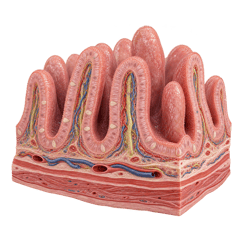 Where the sugar gets in Small intestine Enzymes from the pancreas finish the job, and the wall pulls glucose into the blood.
-
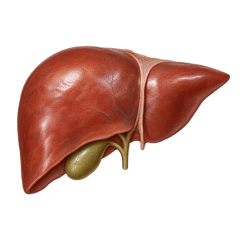 First stop in the blood Liver It takes 30 to 40% of an oral glucose load and stops making its own.
-
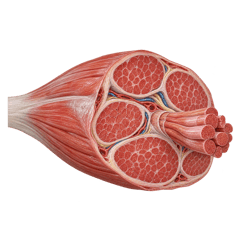 Most of the rest Muscle About 80% of the sugar insulin moves ends up here, and working muscle pulls more.
Sources: NIDDK on digestion, DeFronzo and Tripathy 2009 on where the glucose goes.
Your mouth starts it. The US National Institute of Diabetes and Digestive and Kidney Diseases (NIDDK) puts it plainly: saliva “has an enzyme that begins to break down starches in your food.” Then your stomach mixes the food with digestive juices and empties it into your small intestine slowly.
The small intestine is where the sugar gets in. The pancreas sends in enzymes that break carbohydrates down, the starch comes apart into simple sugars, and the intestinal wall absorbs them into your bloodstream. That blood goes to the liver first.
The liver gets the first pick. During a glucose drink test, about 30 to 40% of the glucose is taken up by the liver and the gut around it, and the rising sugar and insulin tell the liver to stop releasing its own. What gets past the liver spreads through your blood, and the pancreas answers with insulin. In studies that hold insulin high, about 80% of the glucose taken up lands in muscle, and under 5% in fat.
The blood itself holds very little. All the sugar in the blood of a 154 pound adult is about 4 grams, one teaspoon. A cup of white rice brings about 44 grams of digestible carbs. So your body has to move sugar out of the blood almost as fast as it comes in, and the hill is the small gap between the two.
What decides the size of the hill
- Can of cola peaks near 116 mg/dL (6.4 mmol/L) at 29 minutes and is 91 at two hours.
- 1.5 cups white rice peaks near 130 mg/dL (7.2 mmol/L) at 40 minutes and is 99 at two hours.
- Pasta, oil, vegetables peaks near 105 mg/dL (5.8 mmol/L) at 50 minutes and is 96 at two hours.
- Cup of broccoli stays flat, near 90 mg/dL.
A teaching model built from published averages for a healthy adult, not a prediction for you. People eating the same meal can differ a lot. How the model works
How much. The biggest change comes from the amount of starch and sugar. Each meal in the model above makes a hill whose area matches its glycemic load: its GI times the grams of digestible carbs, divided by 100. A big bowl of rice simply carries more glucose than a can of cola.
How fast. Drinks get through first. In 15 healthy adults, a glucose drink peaked about 29 minutes in. Fat, protein, fiber and a food’s structure slow the stomach and the gut, so the hill comes later and lower.
Where it goes. Muscles that are working pull sugar in without waiting for insulin, which is why a walk after eating flattens the back half of the hill.
Some foods barely register at all. Broccoli has so few digestible carbs (about 3.5 g in a cup, cooked) that it can’t be tested for a GI. The University of Sydney’s GI group says foods like these contain “no carbohydrate, or so little that their GI cannot be tested according to the standard methodology.”
Eight trips, told one at a time
- Pasta. White flour, yet a low GI of 49, because of how the dough is made. The trouble is the size of the plate.
- A sugary soda. The fastest trip there is, and half of the sugar barely touches your blood.
- White rice. A bigger hill than the soda, and why cooled rice makes a smaller one.
- Fruit. Whole and blended fruit made the same hill in one study. Juice is a different story over years.
- Broccoli. Almost nothing reaches your blood, and it slows what comes with it.
- A sandwich. Two slices of bread, a filling, and the chips and drink that come with it.
- Pasta with olive oil and vegetables. The same pasta, a smaller portion and a slower trip.
- Rice first or protein first? The same food in a different order, and a peak more than 40% lower.
Want to watch it happen? The simulator runs any of 248 meals from the meal index through the same route, from real time up to 100 times faster, with the sugar flowing from your gut to your liver, muscle and brain.
8 sources
- Gentinetta S and others, Dietary recommendations for the management of gastrointestinal symptoms in patients treated with GLP-1 receptor agonist, Diabetes, Metabolic Syndrome and Obesity, 2024pmc.ncbi.nlm.nih.gov
- National Institute of Diabetes and Digestive and Kidney Diseases, Your digestive system and how it worksniddk.nih.gov
- DeFronzo RA and Tripathy D, Skeletal muscle insulin resistance is the primary defect in type 2 diabetes, Diabetes Care, 2009pmc.ncbi.nlm.nih.gov
- Hutchins KM and others, Continuous glucose monitor overestimates glycemia, with the magnitude of bias varying by postprandial test and individual, American Journal of Clinical Nutrition, 2025pmc.ncbi.nlm.nih.gov
- Atkinson FS, Foster-Powell K and Brand-Miller JC, International tables of glycemic index and glycemic load values, Diabetes Care, 2008pmc.ncbi.nlm.nih.gov
- Wasserman DH, Four grams of glucose, American Journal of Physiology Endocrinology and Metabolism, 2009pmc.ncbi.nlm.nih.gov
- US Department of Agriculture, Agricultural Research Service, Nutritive Value of Foods, Home and Garden Bulletin 72, 2002ars.usda.gov
- University of Sydney, Glycemic Index FAQsglycemicindex.com