Does fruit raise blood sugar? What happens when you eat it
On this page
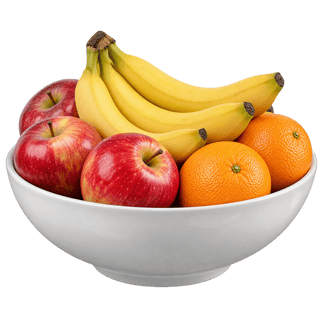
Fruit is mostly sugar and water, but it makes small hills. An apple has about 17 grams of carbs you digest and scores 36 on the GI scale, so its glycemic load is about 6, a quarter of a can of cola. Part of the reason is that much of fruit’s sugar is fructose, which barely moves blood sugar. The bigger reason is the amount: a piece of fruit just doesn’t hold that much.
What we’d do
Eat whole fruit, every day if you like. Have it as a piece, not a glass. Berries, apples, pears and oranges are the smallest hills, and watermelon is bigger than people expect only because of its GI. If your numbers are in the prediabetes range, fruit isn’t the thing to cut. Sugary drinks and big piles of starch are.
Why fruit gets blamed
Fruit tastes sweet, so people with a sensor or a new prediabetes result often cut it first. Some low-carb plans ban it. And a banana does make a hill on a sensor.
But fruit sugar is a mix. Fructose scores 15 on the GI scale and glucose 103, and most fruit carries a good share of fructose. Whole fruit also comes in small portions with fiber and water. The international tables put apples at 36, oranges at 43, bananas and mangoes at 51, pineapple at 59 and watermelon at 76.
The trip, stop by stop
-
 Mouth Chewing breaks the cells open and releases the juice.
-
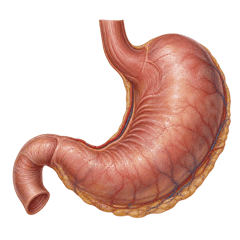 Stomach Mixed with digestive juices and let out slowly.
-
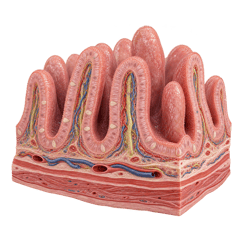 Small intestine Glucose, fructose and sucrose are absorbed. There's little starch to cut.
-
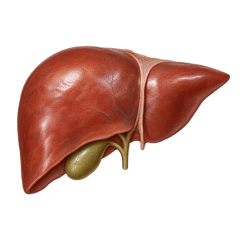 Blood and liver The glucose raises blood sugar a little. The fructose barely does.
-
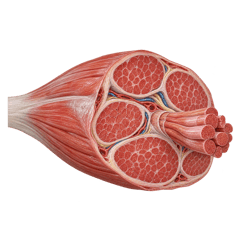 Muscle A small dose of glucose, easily moved out.
When you eat an apple, chewing breaks it into pieces and your stomach mixes it with digestive juices and empties it slowly into the small intestine. There, its sugars get absorbed into your blood. The glucose part raises blood sugar, and the fructose part shows up much less in a blood sugar test, which is why whole fruit scores low.
Whole, blended and juiced
Here’s a result that surprises people. In a 2025 study of 15 healthy adults, researchers served the same 50 g of fruit carbs (mostly apple, with mango, banana and orange) as whole fruit and as the same fruit blended. The fingertip hills were almost the same: an area of 93 for the whole fruit and 98 for the blend, with peaks of 7.1 mmol/L (128 mg/dL) for both.
Blending didn’t make much difference to one hill. Juice is a different case, for two reasons. It’s easy to drink a lot: a cup of orange juice has about 25 g of sugar, the juice of about three oranges, and it’s gone in a minute. And over years, juice and whole fruit went opposite ways. In three US studies of 187,382 health professionals, eating three servings a week of blueberries went with 26% less type 2 diabetes, grapes and raisins 12% less, and apples and pears 7% less. Fruit juice went with 8% more.
What the hill looks like
- Cup of grapes peaks near 101 mg/dL (5.6 mmol/L) at 40 minutes and is 92 at two hours.
- Glass of orange juice peaks near 104 mg/dL (5.8 mmol/L) at 29 minutes and is 91 at two hours.
- Banana peaks near 101 mg/dL (5.6 mmol/L) at 40 minutes and is 92 at two hours.
- Apple peaks near 94 mg/dL (5.2 mmol/L) at 50 minutes and is 92 at two hours.
A teaching model built from published averages for a healthy adult, not a prediction for you. People eating the same meal can differ a lot. How the model works
A medium banana has about 25 g of digestible carbs and a load of about 13. A cup of grapes is about the same. A glass of orange juice is about 12, and an apple about 6. Every one of them is a smaller hill than a can of cola (22) or a cup of white rice (32).
Watermelon is the odd one. Its GI is high, 76, but a big wedge holds only about 20 g of digestible carbs, mostly water around them. That puts its load near 15, a medium hill.
What helps
- Whole, not juice. In the same studies, swapping juice for the same amount of whole fruit went with 5% lower diabetes risk.
- With something. Fruit with yogurt, nuts or a meal slows the stomach. An apple with peanut butter is one of the steadiest snacks in the meal index.
- Berries first. A cup of strawberries has about 8 g of digestible carbs, and blueberries had the strongest link with lower diabetes risk.
- Watch the dried fruit and smoothies. Dried fruit packs the sugar of several pieces into a handful, and a big smoothie is several pieces of fruit at once.
More on this in is fruit bad for your blood sugar?
6 sources
- Atkinson FS, Foster-Powell K and Brand-Miller JC, International tables of glycemic index and glycemic load values, Diabetes Care, 2008pmc.ncbi.nlm.nih.gov
- US Department of Agriculture, Agricultural Research Service, Nutritive Value of Foods, Home and Garden Bulletin 72, 2002, items 264, 280, 307, 330, 332, 373 and 378ars.usda.gov
- Hutchins KM and others, Continuous glucose monitor overestimates glycemia, with the magnitude of bias varying by postprandial test and individual, American Journal of Clinical Nutrition, 2025pmc.ncbi.nlm.nih.gov
- Muraki I and others, Fruit consumption and risk of type 2 diabetes: results from three prospective longitudinal cohort studies, BMJ, 2013pmc.ncbi.nlm.nih.gov
- Imamura F and others, Consumption of sugar sweetened beverages, artificially sweetened beverages, and fruit juice and incidence of type 2 diabetes, BMJ, 2015pmc.ncbi.nlm.nih.gov
- National Institute of Diabetes and Digestive and Kidney Diseases, Your digestive system and how it worksniddk.nih.gov