Does olive oil lower the blood sugar spike from pasta?
On this page
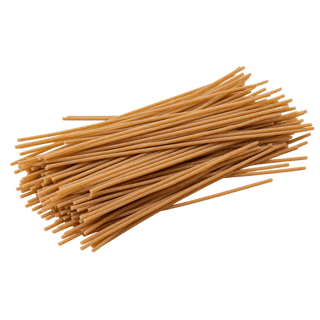
Same pasta, much smaller hill. A cup and a half of whole wheat spaghetti with olive oil, zucchini, tomatoes and spinach carries about 46 grams of digestible carbs, half of a restaurant plate of white spaghetti. The olive oil and vegetables slow the stomach, so what does arrive comes in later and lower. Nothing about the pasta changed except how much of it there is and what’s next to it.
What we’d do
Build the plate the other way round: vegetables and a protein first, a modest pile of pasta, a tablespoon or two of olive oil. Eat the vegetables before the pasta if you can, and take a 10-minute walk afterward. You keep the dish and lose about half the hill.
Pasta or no pasta isn’t the choice
People think the choice is pasta or no pasta. The meal index shows a third option. A restaurant plate of spaghetti bolognese carries a glycemic load of about 46. This plate carries about 22. That’s the difference between a meal in the top 50 of 248 and one near the middle, without giving up pasta.
Most of it is the portion. Some of it is the oil and the vegetables, and that part is less obvious.
The trip, stop by stop
-
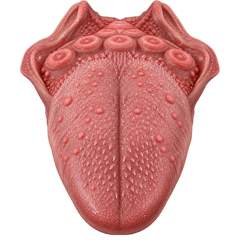 Mouth Firm pasta and vegetables take more chewing.
-
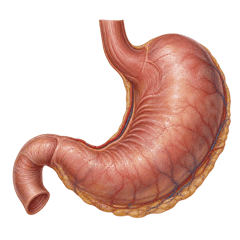 Stomach Fat, fiber and the vegetables slow how fast it empties.
-
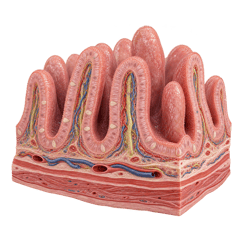 Small intestine The starch arrives a little at a time and is cut into glucose.
-
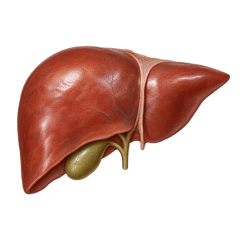 Blood and liver A lower, later hill in the model, around 50 minutes.
-
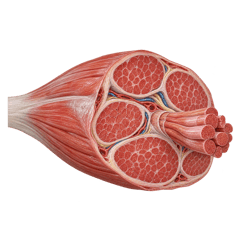 Muscle A walk after dinner pulls more of it into muscle.
The pasta goes the usual way: chewed, mixed in the stomach, cut into glucose in the small intestine. The difference is the stomach. Proteins, fats and fibers all change how fast the stomach empties, and a plate with olive oil and a pile of vegetables leaves more slowly than plain pasta.
You can see fat at work in the GI tables. White bread scores 75. In a 2015 test in Singapore, white bread with olive oil worked into the dough scored 55, and with butter 59. Potatoes show the same thing: boiled potato scores 78, potato chips 56 and french fries 63.
And whole meals do better than their parts. In a study of 30 people, a spaghetti meal with chicken, vegetables and sauce scored 19 points lower on the GI scale when tested whole than its parts predicted.
What the hill looks like
- Restaurant spaghetti peaks near 121 mg/dL (6.7 mmol/L) at 50 minutes and is 103 at two hours.
- Olive oil and vegetables peaks near 105 mg/dL (5.8 mmol/L) at 50 minutes and is 96 at two hours.
- Same, walk after dinner peaks near 101 mg/dL (5.6 mmol/L) at 50 minutes and is 95 at two hours.
A teaching model built from published averages for a healthy adult, not a prediction for you. People eating the same meal can differ a lot. How the model works
The model draws both plates from their carbs and GI. Whole wheat spaghetti scores 48, white spaghetti 49, so the GI barely differs. The load does: about 46 for two and a half cups of white spaghetti against about 22 for a cup and a half of whole wheat. A 10-minute walk after dinner made the rise 22% smaller in 41 adults with type 2 diabetes.
The model doesn’t count the extra slowing from the oil and vegetables, so the real gap is probably bigger.
Olive oil adds no carbs
The USDA lists a tablespoon of olive oil at about 119 calories and no carbohydrate at all. It won’t raise your blood sugar, and it helps slow the meal. It does add calories, which counts if you’re losing weight, so a tablespoon or two is plenty.
What helps
- Halve the pasta, double the vegetables. The portion does the most.
- Eat the vegetables first. In 15 adults with prediabetes, protein and vegetables first with the carbs 10 minutes later lowered the peak by more than 40%.
- Keep some fat. Olive oil, cheese or a protein on the plate all slow the stomach.
- Walk after dinner. Ten minutes, soon after eating.
The surprising part
Whole wheat pasta barely changes the GI, 48 against 49 for white. Its real advantage is the fiber: a cup of cooked whole wheat spaghetti has 6.3 g against 2.4 g for white, so the same cup carries about 31 g of digestible carbs instead of about 38. Swap the pasta and shrink the pile, and the two small changes add up to half the hill.
7 sources
- US Department of Agriculture, Agricultural Research Service, Nutritive Value of Foods, Home and Garden Bulletin 72, 2002, items 176, 646 and 647ars.usda.gov
- Atkinson FS, Foster-Powell K and Brand-Miller JC, International tables of glycemic index and glycemic load values, Diabetes Care, 2008pmc.ncbi.nlm.nih.gov
- University of Sydney, GI Database: white bread with olive oil or butter in the dough (Singapore, 2015), accessed November 15, 2026glycemicindex.com
- Gentinetta S and others, Dietary recommendations for the management of gastrointestinal symptoms in patients treated with GLP-1 receptor agonist, Diabetes, Metabolic Syndrome and Obesity, 2024pmc.ncbi.nlm.nih.gov
- Dodd H and others, Calculating meal glycemic index by using measured and published food values compared with directly measured meal glycemic index, American Journal of Clinical Nutrition, 2011ourarchive.otago.ac.nz
- Reynolds AN and others, Advice to walk after meals is more effective for lowering postprandial glycaemia in type 2 diabetes than advice that does not specify timing, Diabetologia, 2016pubmed.ncbi.nlm.nih.gov
- Shukla AP and others, The impact of food order on postprandial glycaemic excursions in prediabetes, Diabetes, Obesity and Metabolism, 2019pubmed.ncbi.nlm.nih.gov