Does bread raise blood sugar? What happens when you eat a sandwich
On this page
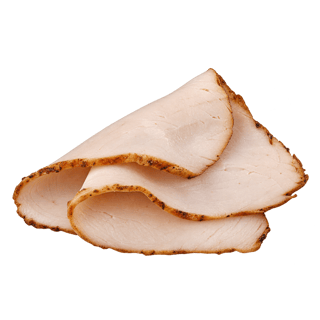
Two slices of white bread have about 23 grams of carbs you digest, and white bread scores 75 on the GI scale. That makes a sandwich a medium hill on its own, about three quarters of a can of cola. The turkey, cheese or egg inside slows it a little. What usually doubles or triples it is what comes with the sandwich: a bag of chips and a soda.
What we’d do
Pick a grainy bread with whole seeds you can see, or sourdough, and put real protein in it. Have water instead of the soda and fruit or vegetables instead of the chips. A big sub roll is about two sandwiches of bread, so half a sub is a sandwich.
Why bread is confusing
Most people swap white bread for whole wheat to help their blood sugar. On the GI scale that barely moves anything: white bread scores 75 and whole wheat 74. Both are made from finely milled flour. Breads with whole grains and seeds you can see score lower, 53 for the international tables’ “specialty grain bread”, and a sourdough wheat bread tested at 54.
The color of the bread makes less difference than its structure, and the size of the roll makes more than both. More on that in is whole wheat bread much better than white?
The trip, stop by stop
-
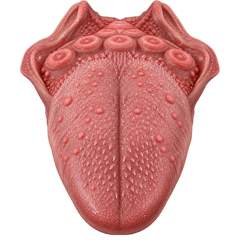 Mouth Soft bread breaks up easily, and saliva starts on the starch.
-
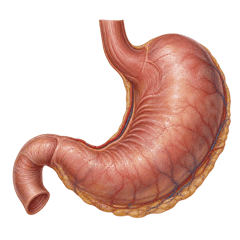 Stomach The turkey and cheese keep it in the stomach a little longer.
-
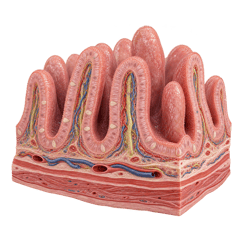 Small intestine Fine flour is cut into glucose quickly.
-
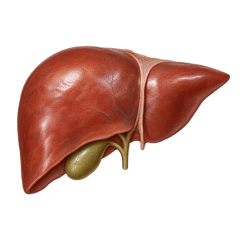 Blood and liver A medium hill, about 23 g of glucose spread over an hour or two.
-
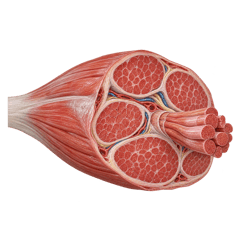 Muscle Insulin moves most of it into muscle.
Bread starts coming apart in your mouth. In the stomach, the protein and fat in the filling slow things down, since protein, fat and fiber all change how fast the stomach empties. In the small intestine, enzymes cut the starch into glucose, and it passes into your blood and on to the liver.
The filling slows it more than the model shows. In a study of 30 people, three meals with chicken, vegetables and sauce came out 22 to 50% lower on the GI scale when tested whole than their parts predicted. Fat baked into bread does something similar: in a 2015 test in Singapore, white bread with olive oil in the dough scored 55 and with butter 59.
What the hill looks like
- Sandwich, chips, cola peaks near 121 mg/dL (6.7 mmol/L) at 50 minutes and is 103 at two hours.
- 6 inch cold cut sub peaks near 115 mg/dL (6.4 mmol/L) at 50 minutes and is 100 at two hours.
- Turkey on white peaks near 101 mg/dL (5.6 mmol/L) at 50 minutes and is 95 at two hours.
- Same on grainy bread peaks near 98 mg/dL (5.4 mmol/L) at 50 minutes and is 93 at two hours.
A teaching model built from published averages for a healthy adult, not a prediction for you. People eating the same meal can differ a lot. How the model works
The sandwich alone on white bread has a load of about 17. On grainy bread it’s about 12. A 6 inch sub roll holds about 51 g of carbs, a load near 38. And the lunch deal is the big one: add a 1 oz bag of chips (about 14 g of digestible carbs) and a can of cola (38 g of sugar) and the load climbs to about 47. The cola alone adds more than the bread.
What helps
- Swap the drink first. It’s the biggest single change on the tray.
- Grainy or sourdough bread. Breads with visible grains and sourdough tested in the 50s. Plain whole wheat didn’t.
- One slice, not a roll. An open sandwich or half a sub halves the bread.
- More filling. Protein and vegetables in the sandwich slow the bread and keep you full.
Does the type of bread make any difference?
It does, a little. Over a day of sandwiches, the gap between white bread (75) and a grainy loaf (53) adds up. But one sandwich on grainy bread is a load of about 12 against 17 on white. Skipping the soda alone saves about 22. So pick the grainy loaf, and spend most of your effort on the drink and the portion.
The surprising part
A grilled cheese with a bowl of vegetable soup (load about 22) makes a smaller hill than a plain bagel (28), because the bagel is about four slices of bread pressed into one ring. Bread is an easy place to see it: the amount moves the hill more than almost anything about the bread itself.
6 sources
- Atkinson FS, Foster-Powell K and Brand-Miller JC, International tables of glycemic index and glycemic load values, Diabetes Care, 2008pmc.ncbi.nlm.nih.gov
- US Department of Agriculture, Agricultural Research Service, Nutritive Value of Foods, Home and Garden Bulletin 72, 2002, items 14, 415, 419, 860 and 1257ars.usda.gov
- University of Sydney, GI Database: sourdough wheat bread (Australia, 2003), white bread with olive oil or butter in the dough (Singapore, 2015), accessed November 15, 2026glycemicindex.com
- Dodd H and others, Calculating meal glycemic index by using measured and published food values compared with directly measured meal glycemic index, American Journal of Clinical Nutrition, 2011ourarchive.otago.ac.nz
- Gentinetta S and others, Dietary recommendations for the management of gastrointestinal symptoms in patients treated with GLP-1 receptor agonist, Diabetes, Metabolic Syndrome and Obesity, 2024pmc.ncbi.nlm.nih.gov
- National Institute of Diabetes and Digestive and Kidney Diseases, Your digestive system and how it worksniddk.nih.gov