When to see a doctor or get help now
On this page
- Is my blood sugar number an emergency?
- When should you call 911 or go to the ER?
- What should you do for low blood sugar?
- When should you call your doctor today?
- When should you book a test this week?
- What if a test is in the prediabetes range?
- How often should you get tested if you feel fine?
- What about medicines and pregnancy?
- What should you bring to the appointment?
Call 911 or go to the ER if blood sugar stays at 300 mg/dL or more with vomiting, fruity breath or hard breathing, or if someone with a low is confused, fainting or can’t swallow. Call your doctor today for 200 or more with strong thirst, peeing a lot, blurry vision or weight loss you didn’t try for. Book a lab test this week for a lab result in the diabetes range, and soon for one in the prediabetes range.
What we’d do
Know the three levels and don’t mix them up. Most blood sugar numbers aren’t emergencies, and a sensor spike after dinner isn’t one. But a lab number in the prediabetes range is a reason to act this month, not next year, and a lab number in the diabetes range is a reason to book the second test this week. If you take insulin, a sulfonylurea or a GLP-1 drug, your targets and your plan for lows come from your prescriber.
If you remember three things
- 911: staying at 300 or more with vomiting, fruity breath or hard breathing, or a low with confusion, fainting or trouble swallowing.
- Call today: 200 or more with thirst, peeing a lot, blurry vision or weight loss you didn’t try for.
- Book a test: any lab number in the prediabetes or diabetes range, and any high number from a meter, sensor or home kit.
Is my blood sugar number an emergency?
Usually not, and that’s where people go wrong in both directions. Some panic at a 170 on a sensor after pizza, which healthy people see too. Others sit on a lab fasting glucose of 112 for years because nobody called them about it, and it’s the second one that costs them. Prediabetes rarely causes symptoms, which is why 8 in 10 American adults who have it don’t know.
A slow leak in the roof doesn’t flood the kitchen today, and that’s the time to fix it. A fire alarm is different, and you act on it now.
When should you call 911 or go to the ER?
For high blood sugar, the CDC says to go to the ER or call 911 if:
- your blood sugar stays at 300 mg/dL (16.7 mmol/L) or above
- your breath smells fruity
- you’re vomiting and can’t keep food or drinks down
- you’re having trouble breathing
- you have several signs of diabetic ketoacidosis (DKA) at once
For low blood sugar, the American Diabetes Association treats a severe low as an emergency. Call 911 if the person can’t swallow safely, is confused or might pass out, is unconscious, or isn’t getting better with sugar. Severe lows are most common with insulin, but the ADA notes they can happen in people who don’t take it, including people on a sulfonylurea.
What should you do for low blood sugar?
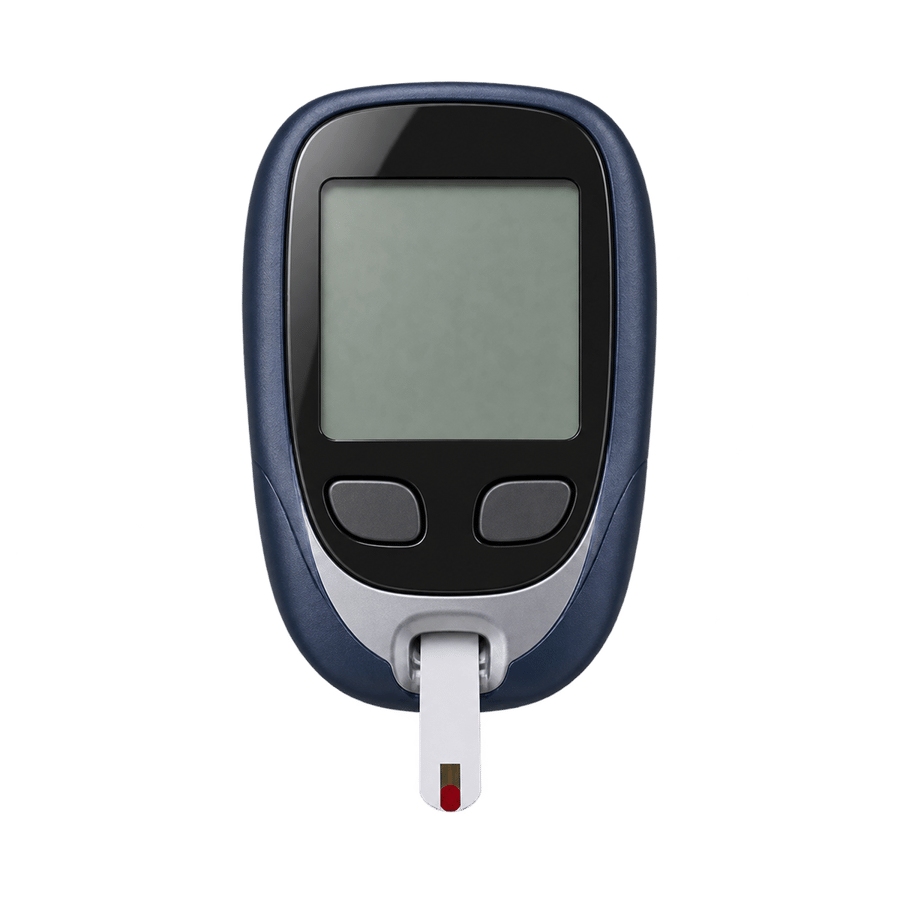
A low is under 70 mg/dL (3.9 mmol/L), and under 54 (3.0) is serious. If you’re shaky, sweaty or hungry and a meter shows under 70, eat or drink 15 grams of fast sugar, such as half a cup of juice or regular soda, and check again in 15 minutes. That’s the ADA’s first step, written for people with diabetes. If it’s still low, repeat it. Then tell your doctor it happened.
If you don’t have diabetes and you feel shaky a few hours after eating, the only way to know if it’s a real low is a finger-stick number taken during the feeling. Doctors look for three things together before they investigate further. You need the symptoms, a low number at that moment, and the symptoms going away once sugar comes up. If you have all three, see your doctor. There’s more in why do I feel shaky a few hours after eating.
When should you call your doctor today?
Call today when a number of 200 mg/dL (11.1 mmol/L) or more comes with the classic symptoms. The ADA counts 200 or more at any time of day, with those symptoms, as enough to diagnose diabetes. The CDC lists the symptoms as:
- peeing a lot
- more thirst and hunger
- losing weight without trying
- tiredness
- feeling irritable or moody
- blurry vision
- frequent urinary tract or yeast infections
For type 2 it adds cuts or sores that heal very slowly, dark patches of skin around the neck, armpits or groin, and numbness or tingling in the hands or feet. Type 2 symptoms often take years to appear, and some people never notice any.
When should you book a test this week?
Book one when a lab result is in the diabetes range, which means fasting 126 mg/dL (7.0 mmol/L) or more, 200 or more two hours after the lab’s glucose drink, or an A1c of 6.5% or more. One result isn’t a diagnosis unless it’s clearly high, so the ADA asks for a second abnormal result, either a different test from the same draw or a repeat on another day. Book it now rather than waiting for your next checkup.
What if a test is in the prediabetes range?
Fasting 100 to 125 mg/dL (5.6 to 6.9 mmol/L), 140 to 199 two hours after the glucose drink, or an A1c of 5.7 to 6.4% is the prediabetes range. Repeat it with the other test (an A1c if you had a fasting glucose, or the reverse), start the plan and retest in 12 weeks. After that, the ADA says to test every year.
If a finger stick, a sensor or a home A1c kit put you in either range, none of those can diagnose. Book a lab fasting glucose and A1c.
How often should you get tested if you feel fine?
The ADA’s 2026 standards say everyone should be tested from age 35, and earlier with a BMI of 25 or more (23 or more with Asian ancestry) plus another risk factor. With normal results, test again at least every 3 years. With a history of diabetes in pregnancy, test at least every 1 to 3 years. The US Preventive Services Task Force asks for screening in adults 35 to 70 with overweight or obesity. The quiz scores your risk the way the CDC does and gives you a date.
What about medicines and pregnancy?
If you take insulin or a sulfonylurea, your targets and your plan for lows come from your prescriber, and that comes before anything on this site.
If you take a GLP-1 drug such as semaglutide or tirzepatide, ask your prescriber what numbers to aim for. bodyfat.guide explains how GLP-1 drugs work.
Metformin for prediabetes is a decision for you and your doctor. The ADA suggests doctors consider it for some people with prediabetes, such as those aged 25 to 59 with a BMI of 35 or more, a fasting glucose of 110 or more, an A1c of 6.0% or more, or a history of diabetes in pregnancy.
In pregnancy, blood sugar has tighter numbers and its own tests. Take any number you’re worried about to your midwife or doctor.
What should you bring to the appointment?
Bring the number, which test it came from (lab, meter, sensor or home kit), whether you’d fasted and for how long, and the date. If it came from a sensor, bring the report rather than a single number. If you’ve had earlier lab results, bring those too, since a trend over years says more than one value.
9 sources
- CDC, Diabetic ketoacidosiscdc.gov
- American Diabetes Association, Severe hypoglycemiadiabetes.org
- American Diabetes Association, Standards of Care in Diabetes 2026, section 6, Glycemic Goals, Hypoglycemia, and Hyperglycemic Crisespmc.ncbi.nlm.nih.gov
- American Diabetes Association, Standards of Care in Diabetes 2026, section 2, Diagnosis and Classification of Diabetespmc.ncbi.nlm.nih.gov
- American Diabetes Association, Standards of Care in Diabetes 2026, section 3, Prevention or Delay of Diabetespmc.ncbi.nlm.nih.gov
- CDC, Diabetes symptomscdc.gov
- Cryer PE and others, Evaluation and management of adult hypoglycemic disorders: an Endocrine Society clinical practice guideline, Journal of Clinical Endocrinology and Metabolism, 2009pubmed.ncbi.nlm.nih.gov
- CDC, Prediabetes: could it be you? Updated February 17, 2026cdc.gov
- US Preventive Services Task Force, Screening for prediabetes and type 2 diabetes, 2021uspreventiveservicestaskforce.org