
Why do I feel shaky a few hours after eating?
On this page
The only way to know if it’s low blood sugar is a finger-stick test while you feel it. A number under 70 mg/dL (3.9 mmol/L) that gets better when you eat is a reason to see a doctor. Fainting, confusion or trouble swallowing means call 911.
What we’d do
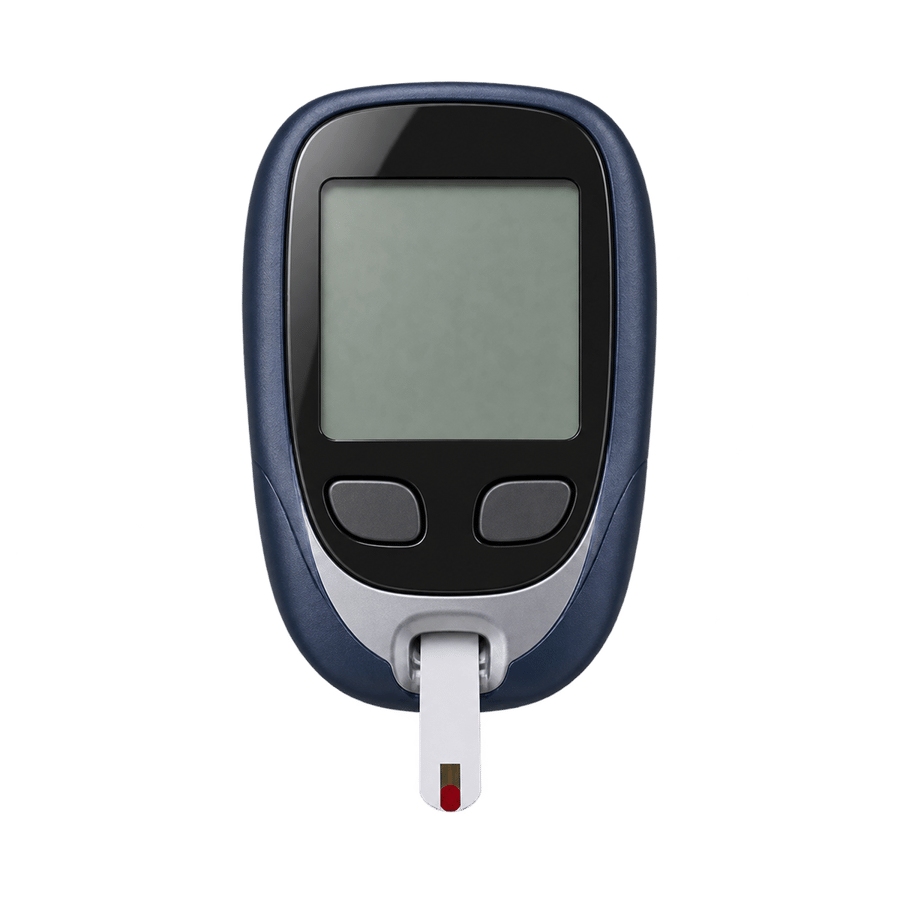
Get a cheap finger-stick meter and keep it nearby. Next time the shakiness hits, test before you eat, then eat something with fast sugar, and write down the time, the number and what you ate before. A few of those notes tell a doctor more than any description of the feeling.
Why it’s hard to tell
Shakiness is a vague signal. Lots of things make people shaky, sweaty or light-headed, and the feeling alone doesn’t tell you which one it is. Low blood sugar after meals gets talked about a lot, so plenty of people assume that’s it, and some change how they eat to avoid a low they’ve never measured.
What doctors look for
The Endocrine Society’s guideline says doctors should only work up a low when three things line up. Together they’re called Whipple’s triad.
- Symptoms that fit a low, like shaking, sweating, a fast heartbeat, hunger or confusion.
- A low blood sugar measured at the same time.
- Relief once your blood sugar comes back up.
The guideline asks for all three to be documented, which is why the meter is the first step. A shaky feeling with a normal number points somewhere else, and a low number with relief after eating is the pattern that gets looked into.
It’s like a smoke alarm that goes off. You check for smoke before you call the fire department, because sometimes it’s just the toast.
If you measure a low
Under 70 with symptoms, have 15 g of fast sugar, such as 4 ounces (half a cup) of juice or regular soda, 3 to 4 glucose tablets or a tablespoon of sugar, then check again in 15 minutes (CDC). Repeat if you’re still under 70. Then book an appointment, and bring your notes.
Call 911 if the person is confused, fainting, can’t swallow safely or doesn’t respond (American Diabetes Association). Don’t put food or drink in their mouth if they can’t swallow.
What else causes lows
In people without diabetes, the guideline tells doctors to look first at drugs, serious illness, hormone problems and certain tumors. Insulin and diabetes pills that make the pancreas release insulin, such as sulfonylureas, are the most common cause of lows overall. Alcohol can cause a low hours after the last drink, especially on an empty stomach.
A word about sensors
A sensor isn’t the right tool for this. Healthy people spent about 15 minutes a day under 70 on a blinded sensor, and sensors are off by more in some people than others. Check a low number on your arm with a finger stick, and test during the feeling itself.
The full list of numbers and symptoms that need action is on what blood sugar level is dangerous? and when to see a doctor.
7 sources
- Cryer PE and others, Evaluation and management of adult hypoglycemic disorders: an Endocrine Society clinical practice guideline, Journal of Clinical Endocrinology and Metabolism, 2009pubmed.ncbi.nlm.nih.gov
- CDC, Low blood sugar (hypoglycemia)cdc.gov
- CDC, Treat low blood sugar (hypoglycemia)cdc.gov
- American Diabetes Association, Severe hypoglycemiadiabetes.org
- American Diabetes Association, Alcohol and diabetesdiabetes.org
- Shah VN and others, Continuous glucose monitoring profiles in healthy nondiabetic participants: a multicenter prospective study, Journal of Clinical Endocrinology and Metabolism, 2019pmc.ncbi.nlm.nih.gov
- Hutchins KM and others, Continuous glucose monitor overestimates glycemia, with the magnitude of bias varying by postprandial test and individual, American Journal of Clinical Nutrition, 2025pmc.ncbi.nlm.nih.gov