Why moving your muscles lowers it
On this page
Your muscles take in most of the sugar that leaves your blood, and a working muscle pulls sugar in by its own route, without waiting for insulin. That route still works when insulin doesn’t, which is why a 10-minute walk soon after eating lowers the rise after a meal. Very hard efforts push blood sugar up for a while, and that’s normal.
What we’d do
Walk for 10 minutes after each meal, starting with dinner, since it’s the meal most people sit after. Go as soon as you’ve finished eating. Build up to 150 minutes a week of brisk walking, and add strength work two days a week. If you sit all day, get up and walk for a few minutes every hour or so. If a sensor shows your blood sugar climbing during a hard workout, leave it alone. It comes back down.
If you remember three things
- Muscle is your biggest sugar store, and working muscle fills itself without needing insulin.
- Ten minutes after each meal beat one 30-minute walk a day by 12%, and by 22% after dinner.
- Sooner after eating is better. Moving after a meal beat moving before it.
Can a 10-minute walk really do anything?
It sounds too small. People picture blood sugar as something you fix with a strict diet or a hard workout, and ten minutes of strolling after dinner feels like a nice idea with nothing behind it. Others have the opposite worry. They wear a sensor, go for a hard run, and watch their blood sugar go up.
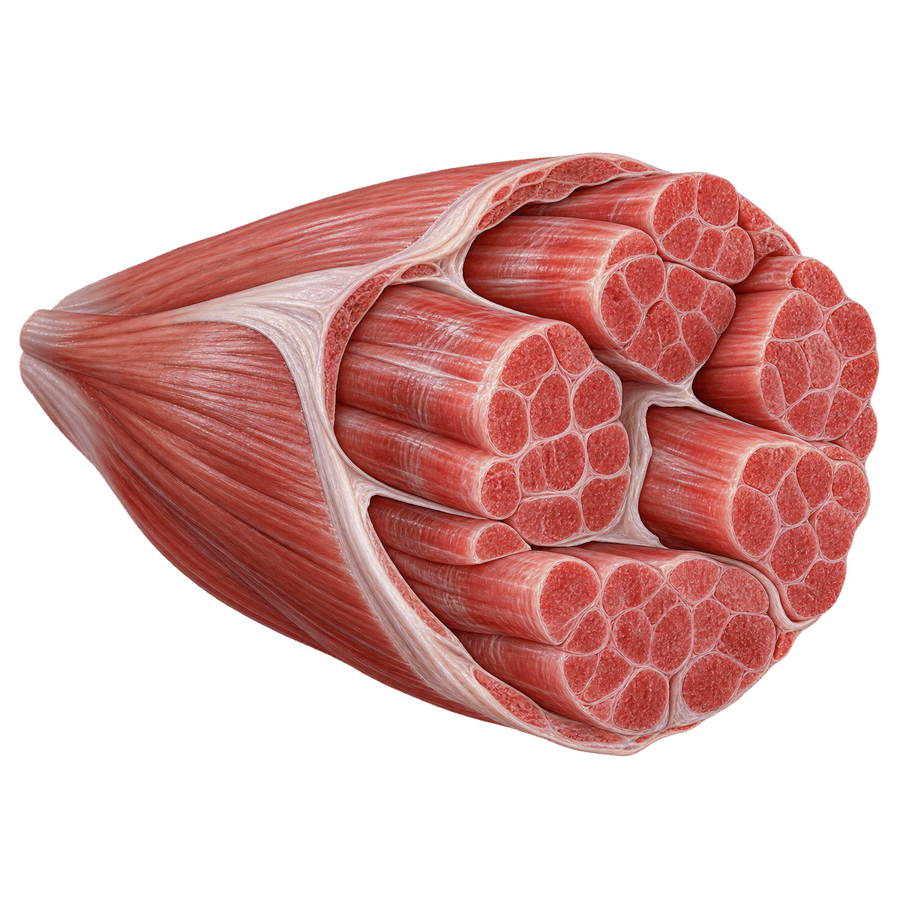
Both make sense once you know where blood sugar goes. When insulin is doing the work, about 80 to 90% of the sugar taken up goes into skeletal muscle. Muscle is the biggest store you have, and moving it is how you open it.
A walk after a meal is like a supermarket opening extra checkout lanes right as the crowd walks in. The same number of shoppers get through, but the line never backs up into the street.
How do muscles pull sugar in without insulin?
Sugar gets into a muscle cell through doors called GLUT4. At rest, most of those doors sit inside the cell. Insulin is one signal that moves them to the surface. Contraction is another, and it uses different signals inside the cell, separate from insulin’s.
That second route still works in people whose insulin works poorly. In a 1999 study, researchers took thigh muscle samples from 5 people with type 2 diabetes and 5 without, before and after 45 to 60 minutes of cycling. Exercise moved the GLUT4 doors to the cell surface by about the same amount in both groups, 74% and 71%, even though insulin’s route works poorly in type 2 diabetes. A 2017 review of the field put it in one line, that exercise-stimulated glucose uptake “is preserved in insulin-resistant muscle”.
Training adds more doors. Exercise training is the strongest known stimulus for muscle to make more GLUT4, so a fitter muscle can take more sugar at every meal, walking or not.
What did the walking trials find?
Walk after each meal, or once a day
41 adults with type 2 diabetes, two weeks each way. Reynolds and colleagues, 2016
Ten minutes after each meal gave a 12% smaller rise after eating than one 30-minute walk a day, with the same total minutes. After dinner it was 22% smaller, the biggest difference, since dinner is usually followed by the most sitting.
The people had type 2 diabetes. Nobody has run the same trial in people with prediabetes or normal blood sugar.
Before or after the meal
8 trials, 116 people, 47 with type 2. Engeroff, Groneberg and Wilke, 2023
Exercise after a meal lowered the rise after eating more than exercise before it, and more than rest. The shorter the gap between finishing the meal and starting to move, the better.
The trials were small, and the reviewers rated them at high risk of bias.
Break up sitting
7 crossover trials, mostly adults with overweight or obesity. Buffey and colleagues, 2022
Short breaks from sitting lowered blood sugar after meals compared with sitting straight through. Light walking breaks worked better than standing breaks.
Each trial lasted a single day in a lab.
The review that compared before and after took its title from an old proverb, “After dinner rest a while, after supper walk a mile?”, and the trials it pooled came down on the side of the walk.
Does exercise lower your diabetes risk, or just one meal?
It does both. The walks above change single meals. Regular activity changes the bigger number. In the Diabetes Prevention Program, the lifestyle group aimed for 150 minutes a week of activity such as brisk walking, and 74% met that goal at 24 weeks. Among people who missed the weight-loss goal, those who still met the activity goal had 44% lower diabetes risk. The CDC asks adults for 150 minutes of moderate activity a week and muscle-strengthening work on at least 2 days.
tdee.guide explains how your activity level changes what you burn.
Why does blood sugar go up when you exercise hard?
Your liver gets ahead of your muscles. In very hard efforts, above about 80% of your maximum, the liver’s sugar output rises 7 to 8 times while the muscles’ use rises 3 to 4 times, so blood sugar climbs. At exhaustion it can climb a bit more, since the muscles’ use drops off faster than the liver’s output. Then insulin rises for 40 to 60 minutes and brings it back down.
That’s a normal response to a sprint, a race or a heavy lifting session, and it’s not a sign that the workout was bad for your blood sugar. Easy and moderate exercise, like a walk, lowers blood sugar instead.
Does lifting weights help?
Yes, in two ways. Lifting is muscle work, so it opens the same contraction route during the session. And over months it builds and trains muscle, which adds GLUT4 doors and room to store sugar. The CDC’s two days a week of strength work is a good floor. Squats, push-ups, carrying groceries up stairs and lifting at a gym all count.
Who should be careful?
If you take insulin or a sulfonylurea, plan exercise with your prescriber, since both can make blood sugar fall too low during or after activity. Everyone else can start walking tonight.
11 sources
- DeFronzo RA and Tripathy D, Skeletal muscle insulin resistance is the primary defect in type 2 diabetes, Diabetes Care, 2009pmc.ncbi.nlm.nih.gov
- Sylow L, Kleinert M, Richter EA and Jensen TE, Exercise-stimulated glucose uptake: regulation and implications for glycaemic control, Nature Reviews Endocrinology, 2017pubmed.ncbi.nlm.nih.gov
- Kennedy JW and others, Acute exercise induces GLUT4 translocation in skeletal muscle of normal human subjects and subjects with type 2 diabetes, Diabetes, 1999pubmed.ncbi.nlm.nih.gov
- Richter EA and Hargreaves M, Exercise, GLUT4, and skeletal muscle glucose uptake, Physiological Reviews, 2013pubmed.ncbi.nlm.nih.gov
- Reynolds AN and others, Advice to walk after meals is more effective for lowering postprandial glycaemia in type 2 diabetes than advice that does not specify timing, Diabetologia, 2016pubmed.ncbi.nlm.nih.gov
- Engeroff T, Groneberg DA and Wilke J, After dinner rest a while, after supper walk a mile? Sports Medicine, 2023pubmed.ncbi.nlm.nih.gov
- Buffey AJ and others, The acute effects of interrupting prolonged sitting time in adults with standing and light-intensity walking on biomarkers of cardiometabolic health, Sports Medicine, 2022pure.ul.ie
- Marliss EB and Vranic M, Intense exercise has unique effects on both insulin release and its roles in glucoregulation, Diabetes, 2002pubmed.ncbi.nlm.nih.gov
- Hamman RF and others, Effect of weight loss with lifestyle intervention on risk of diabetes, Diabetes Care, 2006pubmed.ncbi.nlm.nih.gov
- Knowler WC and others, Reduction in the incidence of type 2 diabetes with lifestyle intervention or metformin, New England Journal of Medicine, 2002pmc.ncbi.nlm.nih.gov
- CDC, Adult activity: an overviewcdc.gov