What is type 2 diabetes? How it develops, with the numbers
On this page
Type 2 diabetes is what happens when your body stops answering insulin well and your pancreas, after years of making extra to make up for it, can’t keep up. Blood sugar then stays high, and over years that damages blood vessels in the eyes, kidneys and heart. It doesn’t arrive in a day. The road takes years, it has no symptoms for most of the way, and for most people it can still be turned around in the middle stretch.
What we’d do
Find out where you are on the road with a lab A1c and fasting glucose, from age 35 or sooner if you carry extra weight. If you’re in the prediabetes range, start the plan the big trial used: lose 5 to 7% of your weight if you carry extra, walk 150 minutes a week, and retest in 12 weeks. If a lab number is in the diabetes range, book a second test this week and see your doctor.
Why it’s easy to misunderstand
Most people think of diabetes as a sugar problem: eat too much sugar, get diabetes. Or they think it arrives suddenly, the day a doctor says the word. Neither fits what the research shows.
Type 2 is mostly a problem of insulin not working well, and it builds slowly. The US Centers for Disease Control and Prevention puts it plainly: with type 2 diabetes, “your body doesn’t use insulin well and can’t keep blood sugar at normal levels.” It makes up about 90 to 95% of diagnosed diabetes.
Type 1 is a different disease, in which an immune reaction stops the body from making insulin. This page is about type 2.
The road, stage by stage
-
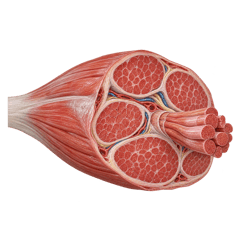 Fasting under 100 Normal Insulin moves sugar into muscle and liver easily.
-
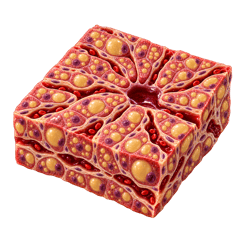 Years, often silent Insulin resistance Muscle and liver answer insulin less, so the pancreas makes more.
-
 Fasting 100 to 125, A1c 5.7 to 6.4% Prediabetes The extra insulin no longer keeps up, and the numbers creep up.
-
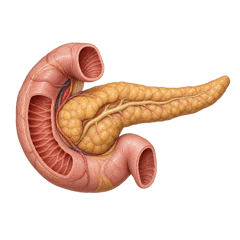 Fasting 126+, A1c 6.5%+ Type 2 diabetes The pancreas falls behind and blood sugar stays high.
Bands from the ADA's Standards of Care 2026. Only a lab test decides a band, and a diagnosis takes two results.
It starts in muscle and liver. In insulin resistance, the cells in your muscles, fat and liver don’t respond well to insulin. Muscle normally takes about 80% of the sugar insulin moves, so when muscle gets resistant, the sugar after every meal has a harder time leaving the blood.
The pancreas covers for it. It makes more insulin, and for years the numbers on a lab test look almost normal. A British study followed 6,538 adults for about 10 years, and 505 of them developed diabetes. Looking back, their insulin sensitivity had been falling steeply for 5 years before the diagnosis, and their output of insulin had gone up, then down. Their fasting glucose only climbed steeply in the last 3 years.
That’s the whole story of type 2 in one study. By the time fasting sugar looks high, the problem has been building for years.
The numbers
More than 2 in 5 American adults have prediabetes, and 8 in 10 of them don’t know it, since it usually has no symptoms. Among people 65 and older it’s more than half. And of the adults who already have diabetes, more than a quarter haven’t been diagnosed.
The road runs both ways. Each year, 5 to 10% of people with prediabetes move on to diabetes, and about the same share go back to normal, according to a 2012 review in The Lancet.
Why high blood sugar is a problem
A single high number after cake does no harm. The damage comes from blood sugar that stays high for years. The CDC lists heart disease, vision loss and kidney disease among the serious problems it can cause, which is why the bands focus on fasting glucose and A1c, a 3-month average, rather than single meals.
What turns it around
The best evidence is the Diabetes Prevention Program. 3,234 American adults with raised blood sugar were split into three groups. The lifestyle group aimed to lose at least 7% of their weight and walk 150 minutes a week. Over 2.8 years, they had 58% fewer new cases of diabetes than the placebo group, and the metformin group 31% fewer.
Going back to normal even once counts. Among 1,990 people followed after the trial, those whose blood sugar returned to normal at least once had 56% lower diabetes risk later, whichever group they’d been in.
What to do next:
- Find out where you are. Could I have prediabetes? scores the CDC’s risk test in eight taps, and the checker places any number on its band.
- Know the early signs. Mostly there aren’t any, which is why the early signs of prediabetes are numbers.
- Start the plan. How do I reverse prediabetes? has the trial’s plan week by week, and the habits that cut your type 2 risk sizes each habit on its own.
- Understand the root. How insulin resistance builds covers what it is and how to stop it.
- Already diagnosed? Some people can put type 2 into remission. Can type 2 diabetes be reversed? explains what that means, always with your doctor.
11 sources
- CDC, What is diabetes?cdc.gov
- CDC, National diabetes statistics at a glance, updated September 16, 2026cdc.gov
- CDC, Prediabetes: could it be you? Updated February 17, 2026cdc.gov
- National Institute of Diabetes and Digestive and Kidney Diseases, Insulin resistance and prediabetesniddk.nih.gov
- Tabák AG and others, Trajectories of glycaemia, insulin sensitivity, and insulin secretion before diagnosis of type 2 diabetes (Whitehall II), The Lancet, 2009pubmed.ncbi.nlm.nih.gov
- Tabák AG and others, Prediabetes: a high-risk state for diabetes development, The Lancet, 2012pubmed.ncbi.nlm.nih.gov
- American Diabetes Association, Standards of Care in Diabetes 2026, section 2, Diagnosis and Classification of Diabetespmc.ncbi.nlm.nih.gov
- DeFronzo RA and Tripathy D, Skeletal muscle insulin resistance is the primary defect in type 2 diabetes, Diabetes Care, 2009pmc.ncbi.nlm.nih.gov
- Tahara Y and Shima K, Kinetics of HbA1c, glycated albumin, and fructosamine and analysis of their weight functions against preceding plasma glucose level, Diabetes Care, 1995pubmed.ncbi.nlm.nih.gov
- Knowler WC and others, Reduction in the incidence of type 2 diabetes with lifestyle intervention or metformin, New England Journal of Medicine, 2002pmc.ncbi.nlm.nih.gov
- Perreault L and others, Effect of regression from prediabetes to normal glucose regulation on long-term reduction in diabetes risk, The Lancet, 2012pubmed.ncbi.nlm.nih.gov