What is a CGM, and how do you get one?
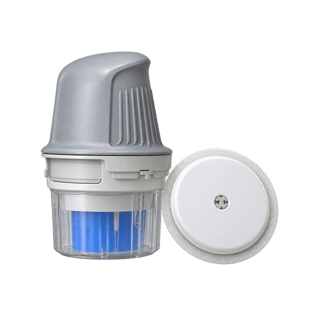
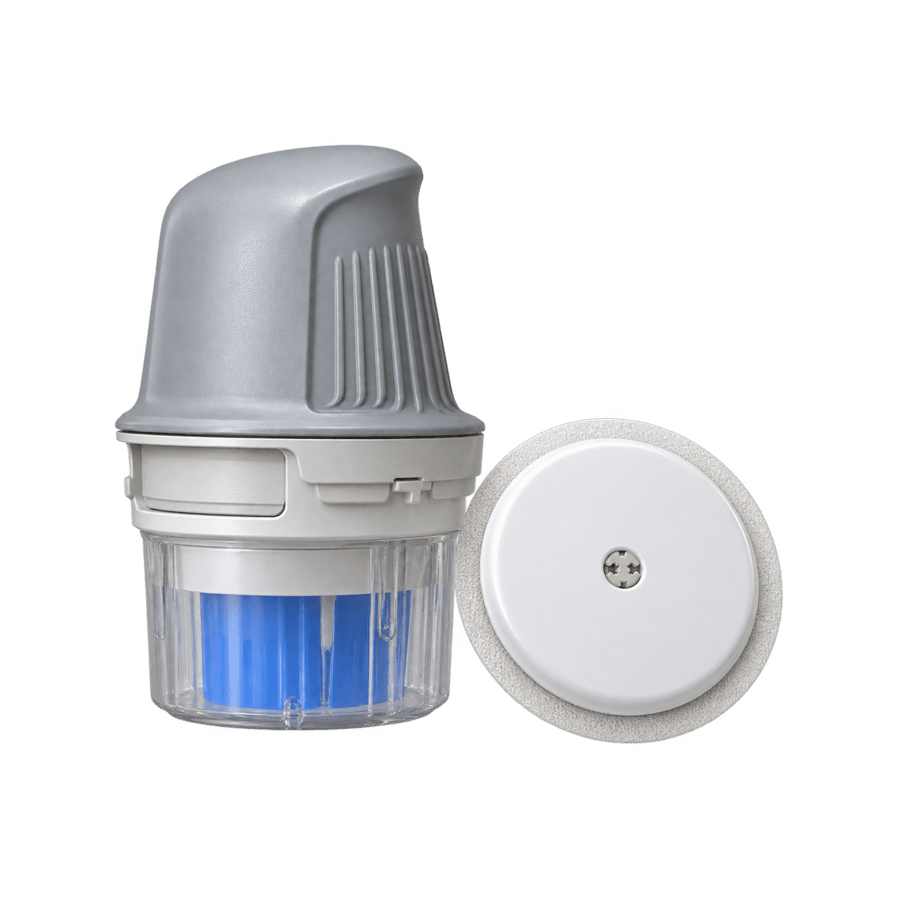
A CGM, short for continuous glucose monitor, is a small sensor you stick on your upper arm. A thin filament under the skin measures the sugar in the fluid around your cells and sends it to your phone, every few minutes, day and night, for about two weeks. In the US you can buy one without a prescription: Dexcom’s Stelo and Abbott’s Lingo are both sold to adults who don’t use insulin.
What we’d do
Get a lab A1c and a fasting glucose first, because a sensor can’t tell you whether you have prediabetes. Then, if you’re curious, wear one for two weeks as an experiment: eat your usual meals, try a few swaps and a walk after dinner, and write down what changes. Keep the habits that work and take it off.
Why everyone suddenly has one
For years a CGM was a medical device for people with diabetes, mostly those on insulin. Then on March 5, 2024, the US Food and Drug Administration cleared the first over-the-counter one, Dexcom’s Stelo. Now they’re advertised on podcasts and worn by people with perfectly normal blood sugar, and the curves get posted like step counts.
That’s made a lot of people curious and a fair number anxious. A healthy person’s sensor goes over 140 mg/dL every day, and a sensor runs higher than your blood. So it helps to know what you’re buying before you stick it on.
How it works
The sensor doesn’t touch your blood. Its filament sits in the fluid between cells, and glucose takes 5 to 6 minutes to move from the blood into that fluid, in a study of 8 healthy adults. So a CGM is always a few minutes behind a finger stick.
It also tends to run high. In 15 healthy adults, a FreeStyle Libre 2 ran about 16 mg/dL (0.9 mmol/L) above fingertip blood, and between about 5 and 27 mg/dL for two in three people. That’s fine for comparing one meal with another, and it’s why a sensor can’t diagnose anything.
Your options in the US
Over the counter
Dexcom Stelo. Cleared by the FDA for adults 18 and older who don’t use insulin, and not for people with problematic lows. Each sensor is worn up to 15 days. Stelo’s site listed a monthly subscription at $89 on November 15, 2026, and says it’s HSA and FSA eligible.
Abbott Lingo. For adults 18 and older not on insulin, and “NOT intended for diagnosis of diseases, including diabetes,” in Abbott’s words. Each sensor gives data for up to 14 days. Lingo’s site listed a 4-week subscription with 2 sensors at $84 on November 15, 2026.
With a prescription
Medical CGMs. Before Stelo, every CGM sold in the US needed a prescription. Stelo and Lingo aren’t for people who use insulin, so those people still get theirs through a doctor.
If you have diabetes or take insulin or a sulfonylurea, talk to your doctor before buying a consumer sensor. The FDA says users “should not make medical decisions based on the device’s output without talking to their healthcare provider.”
Prices change often, so check the maker’s site on the day you buy.
Should you get one?
It depends on what you want to learn. The best review so far, of 12 studies in adults without diabetes, found sensors may help some diet changes inside a program, but “large, durable benefits and stand-alone efficacy are not established,” and the certainty was low to very low. So a sensor is a learning tool, and an expensive one if you wear it for months.
The pages in this series cover the rest:
- What a CGM can tell you, and what it can’t. Shapes and comparisons, yes. A diagnosis or an exact number, no.
- What a CGM shows about your meals. How to run a two-week experiment and judge a hill.
- Why glucose isn’t the only number to track. The numbers that predict more: weight, fitness, blood pressure, sleep.
- Tracking it in Gyroscope. A Dexcom G6, G7 or Stelo syncs through Apple Health, three hours behind, onto each meal.
Already wearing one? Check your numbers against healthy people with is my sensor running high?, and see how to measure it for how a sensor compares with a lab, a finger stick and a home A1c kit.
8 sources
- US Food and Drug Administration, FDA clears first over-the-counter continuous glucose monitor, March 5, 2024fda.gov
- Dexcom, Stelo product page, accessed November 15, 2026stelo.com
- Abbott, Lingo product page, accessed November 15, 2026hellolingo.com
- Abbott, Lingo and Apple Health integration guidehellolingo.com
- Basu A and others, Time lag of glucose from intravascular to interstitial compartment in humans, Diabetes, 2013pmc.ncbi.nlm.nih.gov
- Hutchins KM and others, Continuous glucose monitor overestimates glycemia, with the magnitude of bias varying by postprandial test and individual, American Journal of Clinical Nutrition, 2025pmc.ncbi.nlm.nih.gov
- Makkena HB and others, Behavioral and psychosocial effects of participant-visible continuous glucose monitoring in adults without diabetes: a systematic review, Medicina, 2026pmc.ncbi.nlm.nih.gov
- Shah VN and others, Continuous glucose monitoring profiles in healthy nondiabetic participants, Journal of Clinical Endocrinology and Metabolism, 2019pmc.ncbi.nlm.nih.gov