
How long does it take to lower your A1c?
About 3 months to see most of a change. A1c weighs roughly the last 100 days of blood sugar, with the most recent weeks counting most, so about half of a lasting change shows by 5 weeks and about 80% by 12. A retest at 4 weeks mostly shows your old habits.
What we’d do
Book the retest for 12 weeks after the day you start, at the same lab, and don’t peek at 4 weeks. If you want an early sign that it’s working, a lab fasting glucose moves within days. Keep the habits going after the retest, since the next yearly A1c will show whether they stuck.
Why people retest too soon
You’ve walked after every dinner for a month and dropped 6 pounds, so you want proof. A 4-week A1c that barely moved feels like a failure, and it’s tempting to give up. The test is slow because of how red cells live, and your effort shows up in it later.
How A1c catches up
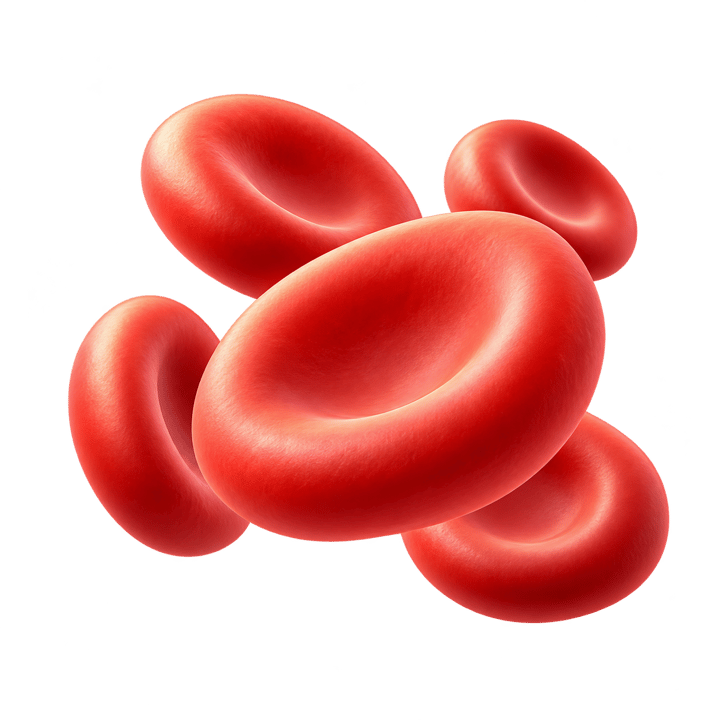
Sugar sticks to the hemoglobin inside your red cells and stays stuck for the life of the cell. In people without diabetes, the average red cell in the blood is 38 to 60 days old. A1c changes as old cells, loaded with sugar from your old habits, get replaced by new cells that grew up in your new ones.
In 1995, researchers followed 9 people newly diagnosed with type 2 diabetes after their blood sugar was brought down in hospital. Their fasting glucose came down fast, with a half-time of about 6 days. Their A1c fell steadily for 2 months with a half-time of about 35 days, then more slowly after that. The researchers worked out that A1c reflects about the last 100 days, weighted most heavily to the days just before the test.
It’s like changing the water in a fish tank by swapping a little each day. The water gets clearer every day, but it takes weeks before most of it is new.
How much shows, week by week
Using that 35-day half-time as a rough model, this is the share of a lasting change you’d see at each retest.
| Retest after | Share of the change you’d see |
|---|---|
| 2 weeks | about 24% |
| 4 weeks | about 43% |
| 5 weeks | about 50% |
| 8 weeks | about 67% |
| 12 weeks | about 81% |
The model is a simplification from a small study in people with diabetes, and real red cells don’t all die on schedule. It’s why a retest at about 12 weeks is the one to trust.
Faster signs
Fasting glucose answers much faster. In the 1995 study it settled within days. In a more extreme study, 11 people with type 2 diabetes on 600 calories a day had normal fasting glucose within a week, and their liver fat fell from 12.8% to 2.9% by week 8. That diet was far more extreme than the prevention trial asked for, but it shows how quickly the liver responds when its fat comes down.
Anything that changes red cell life span also changes A1c, apart from your blood sugar. Blood loss, a transfusion, anemia and iron levels are on the ADA’s list. If one of those has happened since your last test, tell whoever orders the next one.
The prediabetes plan puts your retest date on a calendar, and the A1c converter shows the same 12-week strip filling in.
5 sources
- Tahara Y and Shima K, Kinetics of HbA1c, glycated albumin, and fructosamine and analysis of their weight functions against preceding plasma glucose level, Diabetes Care, 1995pubmed.ncbi.nlm.nih.gov
- Cohen RM and others, Red cell life span heterogeneity in hematologically normal people is sufficient to alter HbA1c, Blood, 2008pmc.ncbi.nlm.nih.gov
- American Diabetes Association, Standards of Care in Diabetes 2026, section 3, Prevention or Delay of Diabetespmc.ncbi.nlm.nih.gov
- Lim EL and others, Reversal of type 2 diabetes: normalisation of beta cell function in association with decreased pancreas and liver triacylglycerol, Diabetologia, 2011pubmed.ncbi.nlm.nih.gov
- American Diabetes Association, Standards of Care in Diabetes 2026, section 2, Diagnosis and Classification of Diabetespmc.ncbi.nlm.nih.gov