Does eating carbs last lower blood sugar?
Yes. Eating the protein and vegetables first and the carbs 10 minutes later cut the blood sugar peak by more than 40% in 15 people with prediabetes, compared with eating the carbs first. It was the same food, the same amount, on the same plate. Only the order changed.
What we’d do
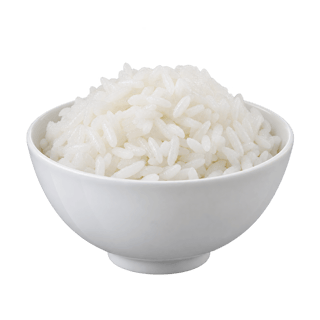
Make it your default at every meal. Eat the salad, vegetables and protein first, and leave the bread, rice, potatoes or pasta for the end. At a restaurant, ask for the bread basket with the main course instead of before it. It costs nothing and you don’t have to give up a single food.
Why it sounds like a gimmick
It all ends up in the same stomach, so it seems the order shouldn’t make any difference. And “eat your vegetables first” sounds like something a parent says, not something a lab would bother testing. But your gut doesn’t absorb a meal all at once. What’s already there changes how fast the next thing gets through.
The study
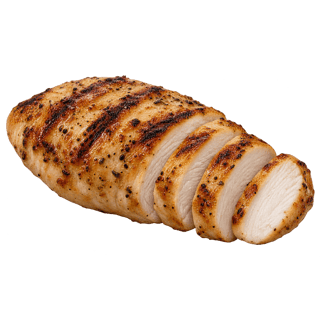
In 2019, researchers gave 15 adults with prediabetes the same lunch on three different days. It was ciabatta bread, grilled chicken breast and a salad with olive oil and balsamic dressing, about 58 g of carbs. Each day they ate it in a different order, and blood was drawn every 30 minutes for 3 hours.
| Order | Peak rise after eating |
|---|---|
| Bread first, chicken and salad 10 minutes later | the highest |
| Chicken and salad first, bread 10 minutes later | more than 40% lower |
| Salad first, then the chicken and bread | more than 40% lower |
With the bread last, the total rise over 3 hours was 38.8% smaller too, and blood sugar stayed steady instead of swinging up and down. The researchers think the fiber and fat eaten first slow down how fast the carbs get absorbed, and they say more work is needed to pin down why.
It’s like merging onto a highway behind a slow truck. The same cars get where they’re going, just spread out instead of all at once.
The limits
It was 15 people, one meal, one sitting each. The researchers point out it’s not clear how well it carries over to other meals, and everyone was chosen by their A1c. We haven’t found a trial testing whether eating carbs last for years lowers diabetes risk.
People differ too. In a study of 800 people and 46,898 meals, the same meal gave very different responses from person to person, so your own hill might shrink more or less than 40%.
Carbs last and a walk
They work on different ends of the same meal, the order on the way in and a walk on the way out. In a separate trial of 41 adults with type 2, a 10-minute walk after each meal made the rise 12% smaller than one daily walk, and 22% smaller after dinner. We haven’t seen the two tested together, so their sizes can’t be added up, but there’s no reason to pick one.
Try the switch on a plate in Flatten the hill, and see why meals make hills in the first place in why meals make hills.
4 sources
- Shukla AP and others, The impact of food order on postprandial glycaemic excursions in prediabetes, Diabetes, Obesity and Metabolism, 2019pubmed.ncbi.nlm.nih.gov
- Shukla AP and others, full text of the same studypmc.ncbi.nlm.nih.gov
- Zeevi D and others, Personalized nutrition by prediction of glycemic responses, Cell, 2015pubmed.ncbi.nlm.nih.gov
- Reynolds AN and others, Advice to walk after meals is more effective for lowering postprandial glycaemia in type 2 diabetes than advice that does not specify timing, Diabetologia, 2016pubmed.ncbi.nlm.nih.gov