Do you have to be overweight to get prediabetes?
Short answerNo
On this page
- Why do people think only overweight people get prediabetes?
- How common is prediabetes at a healthy weight?
- Why would a lean person have high blood sugar?
- How do the screening rules handle weight?
- Can a thin person score high risk?
- The best case for “it’s mostly about weight”
- What should a lean person with prediabetes do?
No. In 2012, 18.5% of US adults at a healthy weight had prediabetes, almost double the share in the early 1990s, and among healthy-weight adults 45 and older it was 33%. Age, family history, sitting, short sleep and a history of diabetes in pregnancy all raise the odds. The ADA says everyone should be tested from 35, whatever they weigh.
What we’d do
If you’re 35 or older and haven’t had a lab A1c and fasting glucose in the last 3 years, get them, thin or not. If you’re lean and your result is in the prediabetes range, don’t explain it away. Your way in is different, and walking after meals, strength work to build muscle and sleep will do more than weight loss. Retest in 12 weeks like anyone else.
If you remember three things
- About 1 in 5 healthy-weight US adults had prediabetes in 2012. One in 3 at 45 and older.
- The ADA says test everyone from 35. Weight only decides whether to start earlier.
- A thin 60-year-old man can score high risk on the CDC’s own test, with a family history and high blood pressure.
Why do people think only overweight people get prediabetes?
Most of the public messages about type 2 diabetes show weight loss as the fix, and for many people it is. Screening rules have long started from weight too, so a lean person with a normal checkup may never be offered a glucose test. People who look fit assume blood sugar is someone else’s problem.
Judging blood sugar by the scale is like judging a car’s engine by its paint. It tells you something, and it misses a lot.
How common is prediabetes at a healthy weight?
In 2016, researchers looked at US national health surveys from 1988 to 2012, focusing on adults 20 and older with a healthy BMI of 18.5 to 24.99. In the early 1990s, 10.2% of them had prediabetes. By 2011 to 2012 it was 18.5%. Among healthy-weight adults 45 and older, it rose from 22.0% to 33.1%.
That’s a large group of people who wouldn’t be flagged by weight, and most of them won’t know. Across all American adults, 8 in 10 people with prediabetes don’t know they have it.
Why would a lean person have high blood sugar?
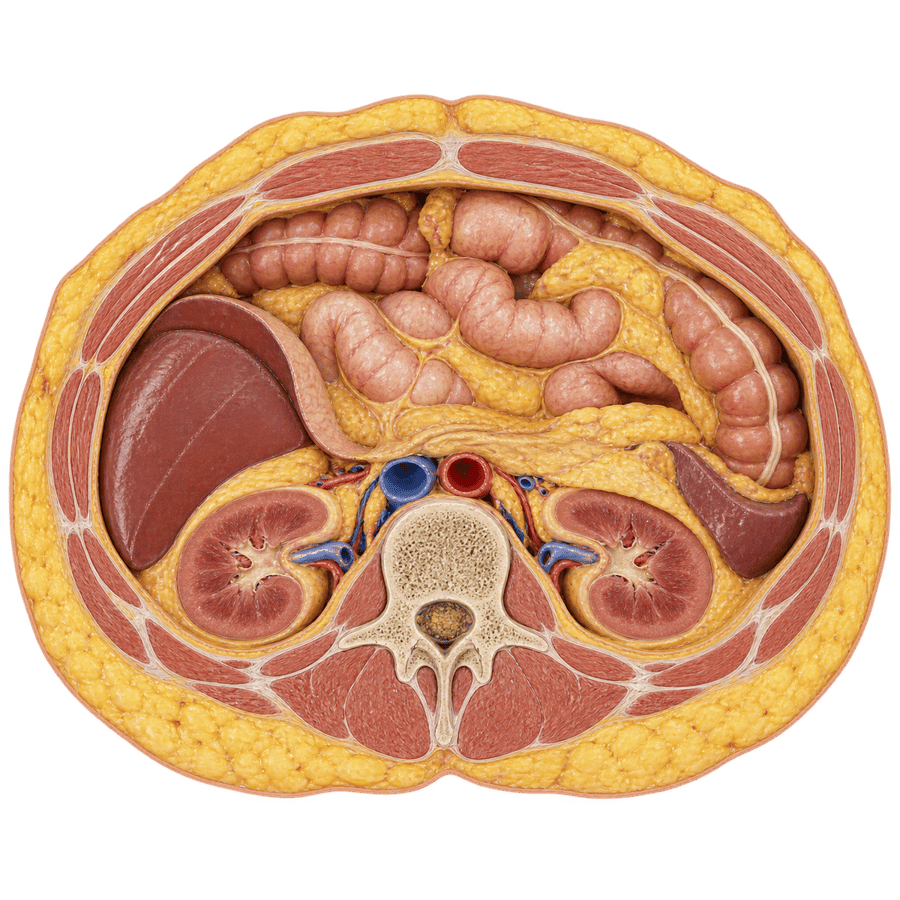
Blood sugar depends on how well your muscles, liver and fat answer insulin, and on how well your pancreas keeps up. Weight affects all of that, but so do other things.
Age. A1c creeps up about 0.1 points a decade in adults without diabetes, and the CDC’s risk test adds a point for each decade from 40.
Family. A parent, brother or sister with type 2 diabetes raises your odds, whatever you weigh.
Muscle and sitting. Muscle takes about 80 to 90% of the sugar insulin moves, so less muscle means a smaller store. Long stretches of sitting raise blood sugar after meals, and short walking breaks bring it down.
Sleep. A week of 5-hour nights made healthy, lean men’s insulin work 11% worse.
Pregnancy. Women who had diabetes in a pregnancy carry a higher risk afterward, and the ADA asks them to test at least every 1 to 3 years.
Ancestry. The ADA and the US Preventive Services Task Force set the BMI line at 23 instead of 25 for people of Asian ancestry.
How do the screening rules handle weight?
The ADA’s 2026 standards say testing should begin at 35 for everyone. Weight decides whether to start earlier. Adults with a BMI of 25 or more (23 or more with Asian ancestry) and another risk factor should be tested sooner. With normal results, test again at least every 3 years.
The US Preventive Services Task Force’s 2021 rule is narrower. It asks for screening in adults 35 to 70 with overweight or obesity. A lean person outside that rule can still ask for a test.
Can a thin person score high risk?
Yes. The CDC’s prediabetes risk test gives points for age, sex, family history, high blood pressure, activity and weight. Take a man of 60 at a healthy weight who’s active, with a parent who had type 2 and blood pressure his doctor called high. Age gives him 3 points, being a man 1, family 1 and blood pressure 1. That’s 6 points with zero for weight, and the CDC counts 5 or more as high risk for prediabetes. The quiz scores you the same way.
The best case for “it’s mostly about weight”
It is mostly about weight, for most people. Extra weight is a big risk, and in the Diabetes Prevention Program, weight lost was what predicted who stayed free of diabetes. A lean person’s risk is lower on average than a heavy person’s of the same age.
But lower risk still leaves a lot of lean people in the range, as the survey numbers show, and if you’re lean the test is the only way to know.
What should a lean person with prediabetes do?
Confirm it with the other lab test, then start where your risk actually comes from. Walk 10 minutes after each meal, and build up to 150 minutes a week. Add strength work twice a week, since muscle is your biggest sugar store. Protect 7 hours of sleep. Cut sugary drinks. Retest in 12 weeks. The plan hides the weight target when your BMI is under 25 (23 with Asian descent) and starts you on walking and sleep instead.
9 sources
- Mainous AG and others, Prevalence of prediabetes and abdominal obesity among healthy-weight adults: 18-year trend, Annals of Family Medicine, 2016annfammed.org
- American Diabetes Association, Standards of Care in Diabetes 2026, section 2, Diagnosis and Classification of Diabetespmc.ncbi.nlm.nih.gov
- US Preventive Services Task Force, Screening for prediabetes and type 2 diabetes, 2021uspreventiveservicestaskforce.org
- CDC, Prediabetes risk test, how your test is scoredcdc.gov
- CDC, Prediabetes: could it be you? Updated February 17, 2026cdc.gov
- DeFronzo RA and Tripathy D, Skeletal muscle insulin resistance is the primary defect in type 2 diabetes, Diabetes Care, 2009pmc.ncbi.nlm.nih.gov
- Buxton OM and others, Sleep restriction for 1 week reduces insulin sensitivity in healthy men, Diabetes, 2010pubmed.ncbi.nlm.nih.gov
- Buffey AJ and others, The acute effects of interrupting prolonged sitting time in adults with standing and light-intensity walking on biomarkers of cardiometabolic health, Sports Medicine, 2022pure.ul.ie
- Pani LN and others, Effect of aging on A1C levels in individuals without diabetes, Diabetes Care, 2008pmc.ncbi.nlm.nih.gov