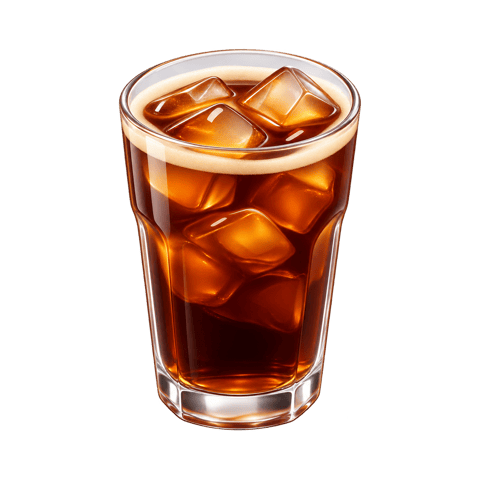
Cola
A 12 oz can has 38 g of carbs, 0 g of it fiber. With a GI of 59, that's a glycemic load of 23.
What's in a serving
- GIout of 100, pure glucose 59
- Glycemic loadin the serving 23
- Digestible carbsof 38 g carbs in all 38 g
- Fiberin the serving 0 g
A serving is a 12 oz can (370 g), from the USDA FoodData Central record 174852 (Beverages, carbonated, cola, regular). Digestible carbs are the carbs minus the fiber, the part glycemic load counts. The GI of 59 comes from the international GI tables (Atkinson 2008), soft drink/soda.
The hill it makes
Here's a serving in our teaching model, drawn for a healthy adult from published averages, beside a glass of orange juice. The height and the length of the hill follow the glycemic load.
- Cola peaks near 116 mg/dL (6.4 mmol/L) at 29 minutes and is 91 at two hours.
- A glass of orange juice peaks near 104 mg/dL (5.8 mmol/L) at 29 minutes and is 91 at two hours.
A teaching model built from published averages for a healthy adult, not a prediction for you. People eating the same meal can differ a lot. How the model works
Ways to keep it steady
- Try a smaller serving.Half as much carries half the load, about 11, since the load is the GI times the carbs you eat.
- Try sparkling water with lemon.It keeps the fizz and the cold, with no sugar to count.
- Walk for 10 minutes after.In 41 adults with type 2 diabetes, a 10-minute walk after each meal made the rise 12% smaller than one 30-minute walk a day, and 22% smaller after dinner (Reynolds 2016).
A swap that does the same job
 Cola a 12 oz can, load 23
 Lemonade 1 cup, load 14
A serving of lemonade carries a load 9 smaller.
More swaps for high GI staples or build a steady plate around it.
 Easily log it with a photo in Food XRAY to see how it fits your day's targets.
This is about blood sugar for people without diabetes. If you take insulin or a sulfonylurea, your targets and meal plan come from your prescriber.