Should you wear a glucose sensor if you don't have diabetes?
On this page
For two weeks, to learn which of your own meals make big hills, it can help. Get a lab A1c and fasting glucose first, since a sensor can’t tell you where you stand. The best review so far found no proof that wearing one improves health in people without diabetes, so treat it as an experiment with an end date.
What we’d do
Lab tests first. If they’re normal or in the prediabetes range and you’re curious, wear a sensor for two weeks. Eat your usual meals, try the same meal with a walk after it or the carbs last, and write down what changes. Then take it off and keep the habits that worked.
Why sensors are everywhere now
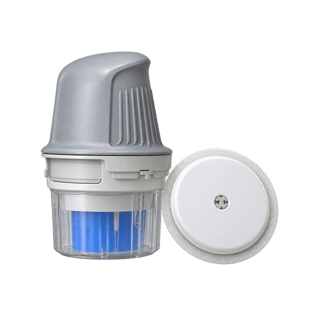
Since March 5, 2024, you can buy one without a prescription. That day the US Food and Drug Administration cleared Stelo, the first over-the-counter sensor, for adults 18 and older who don’t use insulin. It measures every 15 minutes and each sensor lasts up to 15 days. The FDA’s own release says users “should not make medical decisions based on the device’s output without talking to their healthcare provider.”
It’s easy to see the appeal. A number every few minutes feels like a window into your body, and a flat curve looks like health.
What a sensor is good at
People react to food very differently. In a study of 800 people and 46,898 meals, identical meals gave very different blood sugar responses from one person to the next. A sensor is the one tool that shows you your own hills. For two weeks of comparing your breakfasts, or seeing what a walk after dinner does, it’s very good.
It’s like a kitchen scale. Use one for two weeks and you learn what a portion looks like. You don’t need to weigh every meal for the rest of your life.
What it can’t do
- Diagnose. Only a lab test decides where you stand. More than 2 in 5 American adults have prediabetes, and the tests that find it are a lab fasting glucose and an A1c.
- Give exact numbers. In 15 healthy adults, a FreeStyle Libre 2 ran about 16 mg/dL above fingertip blood and counted about four times as much time above 140.
- Tell you a hill is harmful. Healthy people go over 140 on a sensor for about 30 minutes a day, and we haven’t found a trial showing that flattening normal hills helps people without diabetes.
What the evidence says
A 2026 review pulled together 12 studies of adults without diabetes who could see their sensor data. Two trials found some diet changes, like eating fewer carbs, when the sensor came with an education program. Exercise didn’t change. The evidence on mood and stress was too thin to say whether a sensor helps or makes people anxious. The authors concluded that large, lasting benefits and benefits from the sensor on its own “are not established”.
If you wear one, check your report against healthy people’s in is my sensor running high?, and see how accurate glucose sensors are before you trust a single number.
6 sources
- US Food and Drug Administration, FDA clears first over-the-counter continuous glucose monitor, March 5, 2024fda.gov
- Makkena VK and others, Behavioral and psychosocial effects of participant-visible continuous glucose monitoring in adults without diabetes: a systematic review, Medicina, 2026pmc.ncbi.nlm.nih.gov
- Zeevi D and others, Personalized nutrition by prediction of glycemic responses, Cell, 2015pubmed.ncbi.nlm.nih.gov
- Shah VN and others, Continuous glucose monitoring profiles in healthy nondiabetic participants: a multicenter prospective study, Journal of Clinical Endocrinology and Metabolism, 2019pmc.ncbi.nlm.nih.gov
- Hutchins KM and others, Continuous glucose monitor overestimates glycemia, with the magnitude of bias varying by postprandial test and individual, American Journal of Clinical Nutrition, 2025pmc.ncbi.nlm.nih.gov
- CDC, Prediabetes: Could It Be You? (updated February 17, 2026)cdc.gov