How long should you fast before a blood sugar test?
On this page
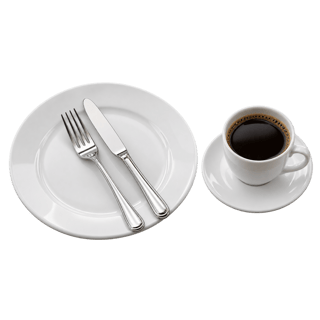
At least 8 hours with no calories, so water only. Milk, sugar or creamer in your coffee breaks the fast, and so does juice or a bite of breakfast. Most people stop eating after dinner and book an early morning draw. If the number surprises you, repeat it on another morning, since a diagnosis takes two results anyway.
What we’d do
Finish dinner the night before, drink water, and book the first slot of the morning. Leave the coffee until after the draw, even black, and skip a hard workout that morning. Ask for an A1c in the same draw. An A1c measures the last few months, so it doesn’t depend on last night.
Why people get it wrong
“Fasting” sounds like skipping breakfast, so plenty of people have a splash of milk in their coffee on the way to the lab, or a sip of juice because they feel light-headed. The fasting lines were set for blood drawn after at least 8 hours with no calories (American Diabetes Association, 2026). A number taken after a little food gets compared against those lines anyway, and it can come out higher than your real fasting level.
What breaks the fast
| Before the draw | Fine? | Why |
|---|---|---|
| Water | yes | no calories, and the lab’s own instructions allow it |
| Black coffee or plain tea | wait until after | almost no calories, but caffeine made people less sensitive to insulin in short trials |
| Milk, cream, sugar or syrup in your drink | no | calories |
| Juice, soda, sweet gum or mints | no | calories |
| Your usual medicines | ask first | don’t stop a prescribed medicine on your own |
| A hard workout | skip it that morning | a hard effort pushes blood sugar up for a while |
The coffee row is the one people argue about. In 7 short trials in healthy people, caffeine on its own lowered insulin sensitivity. It’s a small thing on one morning, but it’s an easy one to remove. A hard session works the same way from the other direction. In efforts above about 80% of your maximum, your liver releases glucose 7 to 8 times faster than at rest, faster than your muscles use it, and blood sugar rises for a while afterward.
Your sugar moves even when you don’t eat
Fasting doesn’t mean your blood sugar sits still. In 8 healthy volunteers watched through the night, glucose rose after 5:30 am with nothing to eat, because the liver started making more glucose before waking. Their insulin rose to match it, so the rise stayed small.
It’s like weighing yourself. You get the most useful number at the same time, on an empty stomach, with nothing in your hands.
If you take insulin or a sulfonylurea
These medicines can drop your blood sugar too low when you skip food, so ask your prescriber how to fast for the test. If you feel shaky or sweaty while fasting, check your sugar if you can, and eat. The test can wait for another day.
If the result surprises you
One fasting number isn’t a diagnosis. Repeat it, ideally with an A1c. If it’s 100 or more, start with is a fasting blood sugar of 100 bad? or put it into the checker.
7 sources
- American Diabetes Association, Standards of Care in Diabetes 2026, section 2, Diagnosis and Classification of Diabetespmc.ncbi.nlm.nih.gov
- MedlinePlus, Blood glucose test, US National Library of Medicinemedlineplus.gov
- Shi X and others, Acute caffeine ingestion reduces insulin sensitivity in healthy subjects: a systematic review and meta-analysis, Nutrition Journal, 2016pmc.ncbi.nlm.nih.gov
- Marliss EB and Vranic M, Intense exercise has unique effects on both insulin release and its roles in glucoregulation, Diabetes, 2002pubmed.ncbi.nlm.nih.gov
- Bolli GB and others, Demonstration of a dawn phenomenon in normal human volunteers, Diabetes, 1984pubmed.ncbi.nlm.nih.gov
- CDC, Low blood sugar (hypoglycemia)cdc.gov
- Tahara Y and Shima K, Kinetics of HbA1c, glycated albumin, and fructosamine and analysis of their weight functions against preceding plasma glucose level, Diabetes Care, 1995pubmed.ncbi.nlm.nih.gov